
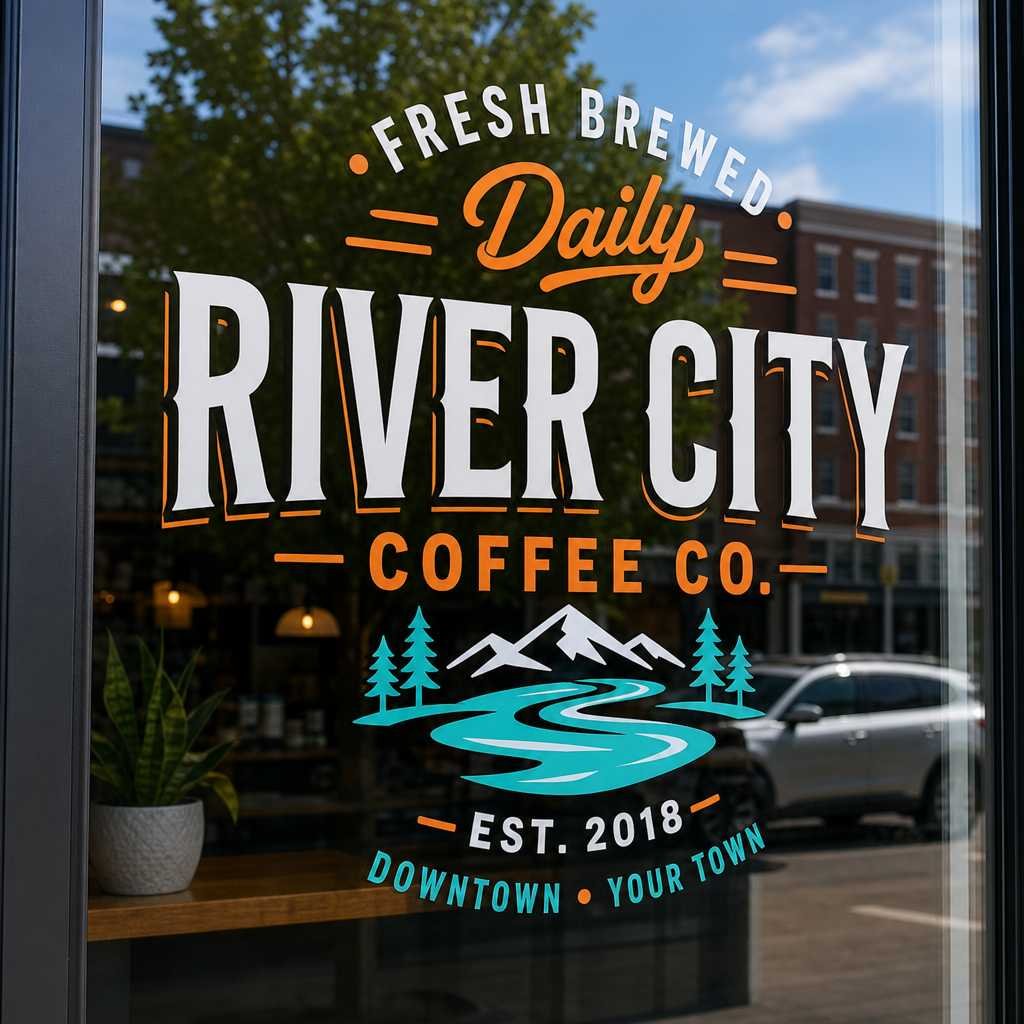
Walk past any storefront and you will notice something immediately: the businesses that look professional are not necessarily the ones spending the most money. They are the ones using custom vinyl options that communicate exactly what they want, in exactly the right place. For small business owners, that precision matters. A generic sign from a big-box store tells customers you exist. A personalized decal on your front door, your vehicle, or your rear window tells them who you are and what you do before they ever step inside.
Table of Contents
- Quick Takeaways
- Why Customization Matters for Business Signage
- Material Choices: ORACAL 651 and Why It Sets the Standard
- Design Options: Color, Font, Size, and Shape
- Comparing Customization Approaches
- Where to Apply Your Personalized Decals
- What Makes Bespoke Signage Different from Off-the-Shelf
- Common Mistakes When Ordering Custom Vinyl Decals
- Frequently Asked Questions
- References
Quick Takeaways
| Key Insight | Explanation |
|---|---|
| ORACAL 651 vinyl is the professional standard | It offers outdoor durability of 6 or more years, UV resistance, and clean adhesion on glass and smooth surfaces, making it the right choice for storefronts and vehicles. |
| Font selection directly affects readability from a distance | Sans-serif fonts like Helvetica or Arial remain legible at 10 feet or more. Decorative scripts often fail at reading distance, especially on rear glass decals. |
| Size is not optional, it is functional | A decal that is too small for its surface is invisible. A rule of thumb: door decals should be no smaller than 6 inches in height for the main text element. |
| Personalized decals outperform generic printed signs for perceived professionalism | Custom-cut vinyl lettering looks permanently installed rather than temporary, which signals stability and credibility to potential customers. |
| Color contrast is more important than color preference | White vinyl on dark glass and dark vinyl on light surfaces consistently outperform brand-matched colors that blend into the background. |
| Made-in-USA sourcing reduces lead times significantly | Domestic production cuts fulfillment time compared to overseas-sourced decals, which matters when you need a grand opening or seasonal update on a deadline. |
| Weatherproof does not mean installation-proof | Even the most durable vinyl decal fails early if applied to a dirty, oily, or textured surface. Surface prep determines longevity more than material grade alone. |
Why Customization Matters for Business Signage

Generic signage has a ceiling. It can tell someone your store is open, but it cannot communicate your brand voice, your hours in your specific format, or the personality that makes customers choose you over the competitor two doors down. Custom vinyl options remove that ceiling entirely.
According to research published by FedEx and summarized widely in retail studies, nearly 76 percent of consumers enter a store they have never visited before based purely on its signage. That is not a minor detail. That is your first and sometimes only sales conversation with a passing customer.
In practice, businesses that invest in personalized decals for their storefronts see a consistent uptick in foot traffic inquiries, particularly when the decals include specific information like open hours, services offered, or contact details. This is not theory. Talk to any independent retailer who upgraded from a handwritten paper hours sign to a professionally cut vinyl decal on their front glass, and the story is the same: customers perceive the business as more established, more trustworthy, and more worth entering.
Material Choices: ORACAL 651 and Why It Sets the Standard
Not all vinyl is the same, and this point causes more buyer regret than almost any other factor in custom decal ordering. Budget vinyl uses lower-grade adhesive that yellows, lifts, and bubbles within a year of outdoor exposure. ORACAL 651 is a calendered vinyl rated for outdoor use of six or more years under normal UV and weather conditions. It is the industry standard for a reason.
What ORACAL 651 Actually Delivers
ORACAL 651 offers a permanent, solvent-based adhesive that bonds cleanly to glass, painted metal, and most smooth surfaces without leaving residue when properly removed. It resists moisture, UV fading, and temperature swings, which matters enormously for a storefront decal that faces direct sun in summer and freezing temperatures in winter.
The finish options matter too. Glossy ORACAL 651 reflects light cleanly and reads well on dark glass. Matte versions reduce glare in high-light environments. Neither is universally better. Gloss is the right call for rear window decals on vehicles, where visibility and pop are priorities. Matte works better for interior-facing window decals in bright retail spaces where glare would wash out the message.
Why Inferior Vinyl Costs More in the Long Run
A common mistake is buying cheap vinyl decals to save money upfront. The math does not work. A low-quality decal that peels or fades in 18 months costs you the replacement price plus the labor of removal. A professionally made ORACAL 651 decal that lasts six years is cheaper per year by a wide margin, and it never embarrasses you in front of a customer during those six years.
Pro tip: When ordering open hours decals, always ask whether the vinyl is ORACAL 651 or a comparable professional-grade material. If the vendor cannot answer that question specifically, that is your answer.
Design Options: Color, Font, Size, and Shape
This is where bespoke signage truly separates itself from generic alternatives. Every design variable either adds clarity or subtracts it. There is no neutral choice in vinyl decal design.
Color Selection: Contrast First, Brand Second
Many business owners make the mistake of matching their decal color exactly to their brand palette without accounting for the surface it will be applied to. A navy blue decal on a dark-tinted glass door is effectively invisible from the street. White or light-yellow vinyl on dark glass creates maximum contrast and readability at distance.
The rule is simple: choose contrast first, then find the closest brand-compatible color within high-contrast options. If your brand is dark green and your door glass is dark, use white vinyl with a dark green border or outline, not dark green fill.
Font Selection: Legibility at Distance
Sans-serif fonts outperform decorative scripts in virtually every real-world application for business signage. At 15 feet, a script font becomes an artistic smear. At 15 feet, Helvetica Bold is still perfectly legible. Use decorative fonts sparingly, only for business names or single-word elements, and never for operational information like hours or phone numbers.
Size and Shape: Function Before Aesthetics
The correct size for a decal is determined by where it will be read from, not by what looks nice on a screen at the design stage. A 4-inch tall open hours block might look proportional in a mockup but will be unreadable to a customer standing at the curb. For any decal that needs to be read without stopping or pressing close to the glass, the main text element should be at least 6 to 8 inches tall.
Shape customization, including cut-to-shape options, allows your decal to follow the contour of a logo or specific design element rather than sitting in a rectangle. This looks dramatically more polished and is worth requesting for any customer-facing application.
Comparing Customization Approaches
Not all vendors offer the same depth of customization. The table below compares three approaches that business owners commonly encounter when shopping for personalized decals.
| Approach | Customization Depth | Best For |
|---|---|---|
| Template-based ordering (e.g., pre-designed styles like Open Hours Decal Style 01) | High within template parameters: custom text, hours, colors, and sizes with professional layout already handled | Small business owners who want a professional result without hiring a designer |
| Fully custom design from scratch | Maximum flexibility but requires a print-ready file and design knowledge, or additional design fees | Businesses with an established brand identity and an in-house or contracted designer |
| Generic pre-printed decals (off-the-shelf products) | Minimal: fixed text, fixed size, no brand alignment possible | Temporary use only, not appropriate for permanent or brand-critical applications |
In practice, template-based ordering with real customization variables delivers the best outcome for most small business owners. It removes the blank-canvas paralysis of full custom design while still producing a decal that is specific to your business, your hours, and your brand. Vendors who offer this properly, with real color choices, scalable sizing, and professional ORACAL-grade vinyl, give you the professional result without the design overhead.

Where to Apply Your Personalized Decals
The location of a decal determines everything from size requirements to vinyl type to application method. Personalized decals are not one-size-fits-all, and placing the right decal in the wrong location is a waste of both money and opportunity.
Front Door and Storefront Glass
This is the highest-value real estate for most retail and service businesses. Open hours decals belong here, along with any phone number, website, or key service statement. The glass surface is smooth and ideal for ORACAL 651 permanent vinyl. Position hours decals at eye level, between 54 and 66 inches from the ground, where they are naturally within a standing customer’s field of vision.
Rear Window and Vehicle Decals
Rear glass decals on business vehicles turn every commute and parking lot stop into a brand impression. Unlike painted graphics, vinyl decals on rear glass do not reduce visibility when applied correctly with appropriate see-through perforated vinyl or positioned within the non-obstructed zones. Standard ORACAL 651 works well for solid rear window applications, logo corners, and contact information strips at the bottom of the glass.
Interior Window Facing Outward
Interior-mounted window decals are a smart choice when you want a clean exterior look without exposed vinyl edges that can catch dirt and peel. The decal reads from outside while being protected from weather on the inside surface. This works well for open hours displays, pricing boards, and promotional messages that change seasonally.
Pro tip: For interior-mounted window decals, order the text in a mirrored format so it reads correctly from outside. Many first-time buyers forget this step and receive a decal that reads correctly from inside the store but is backwards to everyone on the street.
What Makes Bespoke Signage Different from Off-the-Shelf
The word bespoke signage gets used loosely, but there is a concrete operational definition that matters for business owners: bespoke signage is made specifically for your business’s dimensions, identity, and communication needs. Off-the-shelf is made for nobody in particular.
“Signage is the most cost-effective form of advertising available to a retail business. A well-designed sign works 24 hours a day, seven days a week, with no recurring cost.” – Sign Research Foundation, Retail Signage Research
The operational difference shows up in three ways. First, fit: a bespoke decal is sized for your specific door or window, not cut down from a standard sheet that leaves awkward margins. Second, information accuracy: your hours, your services, your contact details, not placeholder text that requires you to write over it with a marker. Third, brand alignment: your colors, your font style, your layout, not a competing aesthetic that fights with everything else on your storefront.
The cost difference between off-the-shelf and custom is often smaller than business owners expect. At scale, a professionally customized open hours decal from a domestic specialty vendor costs only marginally more than a generic version, and the business case for the upgrade is overwhelming.
Common Mistakes When Ordering Custom Vinyl Decals
After seeing hundreds of custom decal orders come through specialty print shops, certain errors repeat themselves often enough to be predictable. Knowing them in advance saves time, money, and the frustration of a reprint.
Submitting Low-Resolution Artwork
Raster images below 300 DPI at the intended print size produce blurry, pixelated output. If your logo exists only as a JPEG grabbed from your website, it is likely at 72 DPI and will not print cleanly at decal size. Always submit vector files in .AI, .EPS, or high-quality .PDF format. If you do not have vector files, request that your vendor convert the artwork before production.
Ordering Without Measuring the Surface First
A common mistake is ordering a decal based on how it looks in an online preview rather than measuring the actual surface. Door glass panels vary significantly in width. A decal that is 18 inches wide might fit perfectly on one door and overlap the frame on another. Measure the usable glass area, subtract 2 inches from each side for a clean margin, and specify those dimensions to your vendor before ordering.
Ignoring Surface Texture
ORACAL 651 is designed for smooth surfaces. Applying it to textured surfaces, including brushed metal, brick, concrete, or rough-painted wood, results in poor adhesion and early failure. If your application surface is not smooth glass, polished metal, or painted flat wall, ask specifically about the right vinyl type before ordering. Some applications require cast vinyl or specialty adhesive formulations.
Choosing Color Without Seeing a Physical Sample
Screen colors and printed vinyl colors are different. A digital preview showing a specific shade of red will not match the physical ORACAL color swatch exactly because monitors display in RGB and vinyl is produced in physical pigment. Request a color chart or swatch reference from your vendor, or specify ORACAL color codes by number rather than by name or screen appearance.
Frequently Asked Questions
What is the difference between custom vinyl options and standard pre-made decals?
Custom vinyl options allow you to specify your exact text, dimensions, colors, and design layout before production. Standard pre-made decals use fixed text, fixed sizes, and generic layouts that are not specific to any one business. For a storefront application like open hours, custom is always the correct choice because your specific hours and branding cannot be replicated by a generic product.
How long do personalized decals made with ORACAL 651 last outdoors?
ORACAL 651 is rated for up to 6 years of outdoor exposure under standard UV and weather conditions. In practice, decals applied to shaded or interior-facing surfaces often last longer. Decals on surfaces with extreme direct sun exposure in high-UV climates may show fading closer to the 4 to 5 year mark. Proper surface preparation before application is the single biggest factor in achieving the rated lifespan.
Can I remove a custom vinyl decal without damaging my glass?
Yes. ORACAL 651 is a permanent vinyl, but it is removable from glass without damage when removed correctly. Apply heat from a hair dryer or heat gun to soften the adhesive, then peel slowly at a low angle. Any remaining adhesive residue cleans off with isopropyl alcohol or a commercial adhesive remover. Do not attempt cold removal, which can cause the vinyl to tear and leave adhesive behind.
What information should I include on an open hours decal for maximum customer usefulness?
At minimum, include your days of operation and hours for each. If your hours vary by day group, for example Monday through Friday versus Saturday and Sunday, list them separately on the decal. Including a phone number is useful for customers who arrive outside business hours. Avoid including the year or specific dates on open hours decals so the decal remains accurate across year changes without needing replacement.
Is bespoke signage worth the cost for a small business with a limited budget?
Yes, and the math is straightforward. A professionally made custom vinyl decal applied to your front door glass costs less per month than virtually any other form of local advertising, works continuously without recurring cost, and creates a better first impression than any handwritten or inkjet-printed alternative. The investment is justified even at the smallest business scale. The question is not whether you can afford bespoke signage. It is whether you can afford the ongoing cost of appearing less professional than your competition.
Can vinyl decals be applied to vehicle rear windows without obstructing visibility?
Standard solid ORACAL 651 vinyl applied over the full rear window does obstruct visibility and is not recommended. The correct approach is to position decals within the wiper-free zones at the corners or bottom strip of the rear glass, or to use perforated see-through vinyl for full-window coverage. The perforated option allows an image to be visible from outside while maintaining a degree of visibility from inside the vehicle.
What has been your experience choosing between template-based and fully custom vinyl decal options for your business? Share what worked and what you wish you had known before ordering.
References
- Forbes Business Coverage: insights on small business marketing and signage investment returns
- Statista: consumer behavior statistics relevant to retail signage and in-store decision making
- U.S. Small Business Administration: guidance and resources for small business owners on marketing and storefront presentation
- HubSpot Marketing Statistics: data on customer perception, branding, and first impressions in retail contexts
- U.S. Environmental Protection Agency: regulatory information on vinyl materials, adhesive compounds, and surface application standards