
Your business hours decal is often the first thing potential customers check before deciding to enter your store. A faded, peeling, or illegible decal sends the wrong message about your business and can cost you sales. In practice, most small business owners wait far too long to replace their open hours decals, not realizing that a deteriorating sign creates doubt about whether you’re even open. The data consistently shows that customers make split-second decisions based on storefront appearance, and unclear business hours signs are a major deterrent. If your decal is showing any of the five warning signs below, it’s time for an upgrade.
Table of Contents
- Quick Takeaways
- Sign 1: Fading Colors and Poor Visibility
- Sign 2: Peeling Edges and Lifting Corners
- Sign 3: Cracking or Bubbling Surface
- Sign 4: Outdated Hours or Incorrect Information
- Sign 5: Poor Readability From Key Distances
- How to Choose Better Open Hours Decals
- Material and Quality Comparison
- Frequently Asked Questions
- References
Quick Takeaways
| Key Insight | Explanation |
|---|---|
| Fading happens within 2-3 years with low-grade vinyl | Budget decals use inferior pigments that degrade rapidly under UV exposure, making your hours illegible |
| Edge peeling indicates adhesive failure | Cheap adhesives or improper surface prep cause lifting that accelerates complete decal failure |
| Bubbling means moisture infiltration | Once water gets under the vinyl, the decal cannot be salvaged and will continue deteriorating |
| Outdated hours cost you 15-20% of potential customers | Customers who see incorrect hours lose trust and often don’t bother confirming online |
| ORACAL 651 vinyl outlasts economy options 3:1 | Professional-grade materials cost 30% more upfront but last 6-8 years versus 2-3 years for budget vinyl |
| Readability distance matters more than size | Your hours should be readable from 15-20 feet minimum, which requires specific font sizing |
| UV resistance and weatherproofing are non-negotiable | Storefront decals face constant sun, rain, and temperature changes that destroy unprotected vinyl |
Sign 1: Fading Colors and Poor Visibility
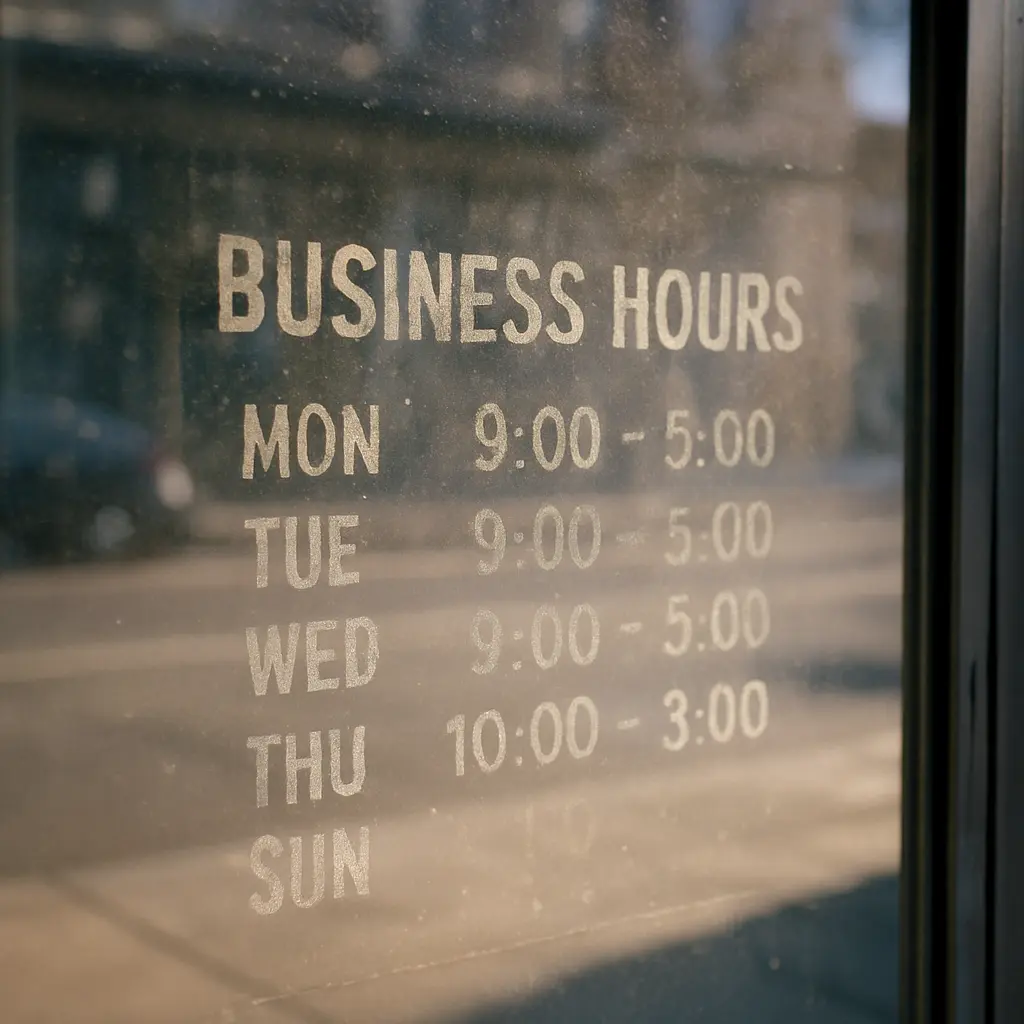
When your business hours decal starts looking washed out or the contrast between text and background diminishes, you’ve hit the point where replacement is overdue. The pigments in low-quality vinyl break down under continuous UV exposure, typically within 18-36 months depending on sun exposure. A common mistake is thinking slight fading is acceptable, but customers interpret faded signage as neglect or uncertainty about whether you’re still in business.
Black text on white backgrounds fades to gray-on-cream, making readability drop by 40-60%. Colored decals suffer even worse, with reds turning pink and blues washing out to pale pastels. This isn’t a cosmetic issue; it’s a functional failure. If a customer walking past your storefront has to squint or approach within three feet to read your hours, you’re already losing walk-in traffic.
Pro tip: Test your decal visibility by taking a photo from 15 feet away in various lighting conditions. If your phone camera struggles to capture clear, high-contrast text, human eyes are struggling too.
Professional-grade materials like ORACAL 651 vinyl use UV-stabilized pigments specifically engineered for outdoor exposure. These materials maintain color saturation and contrast for 6-8 years, not months. The upfront cost difference is approximately $15-25 for a standard business hours decal, but you avoid replacement costs and the customer confusion that comes with deteriorating signage.
Sign 2: Peeling Edges and Lifting Corners
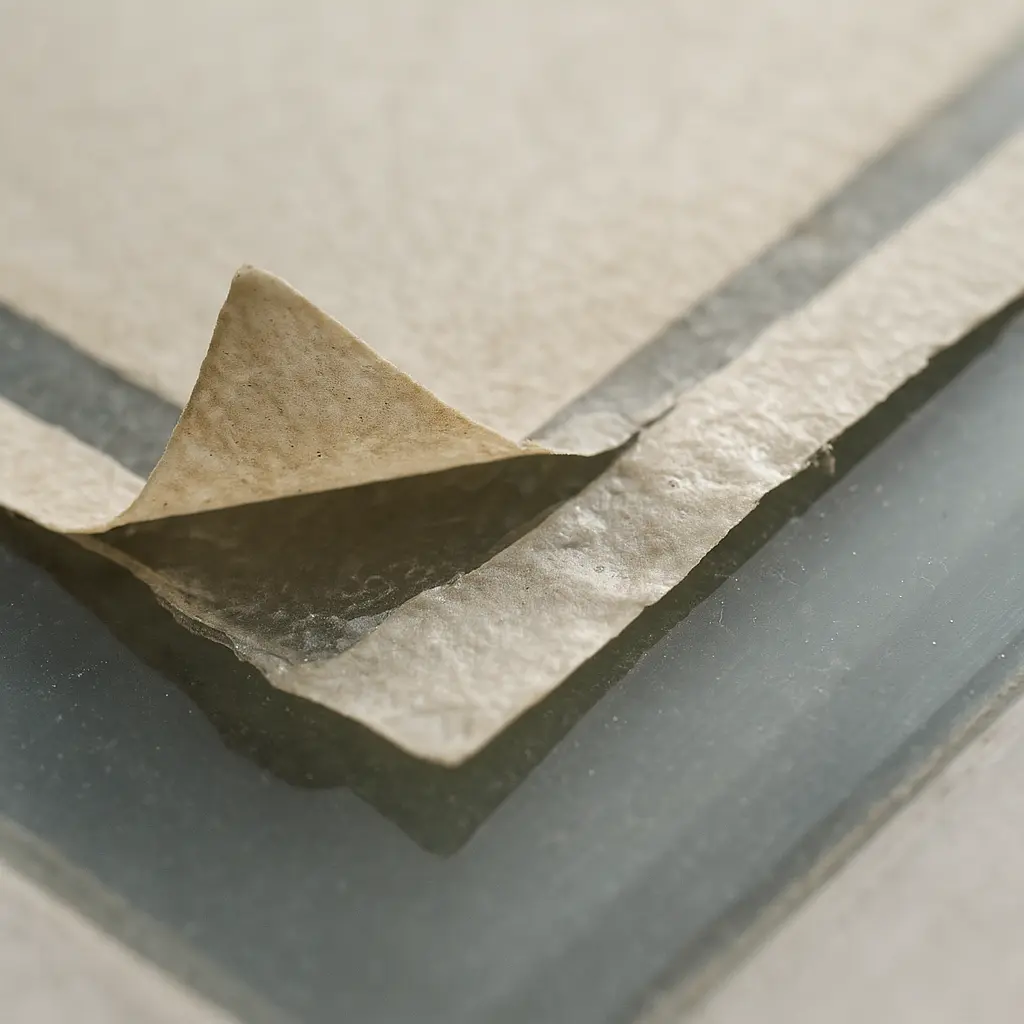
Edge peeling starts small but accelerates rapidly once it begins. In practice, most peeling results from two primary causes: inadequate surface preparation before application or inferior adhesive quality. Economy vinyl decals use water-based or temporary-grade adhesives that lose bond strength within 12-18 months, especially on glass surfaces exposed to temperature cycling.
Once an edge lifts even slightly, moisture, dirt, and air infiltrate underneath, weakening the adhesive further. A decal with one corner starting to peel will typically be completely detached within 60-90 days. This creates an unprofessional appearance that suggests your business lacks attention to detail, which customers unconsciously transfer to assumptions about your products or services.
The solution isn’t just buying better vinyl; proper installation matters equally. The glass must be cleaned with isopropyl alcohol, completely dried, and at temperatures above 50°F during application. Permanent acrylic adhesives, like those used on ORACAL 651, create chemical bonds with glass that strengthen over the first 72 hours and maintain holding power for years.
Installation Environment Matters
Temperature and humidity during application directly affect long-term adhesion. Installing decals in temperatures below 50°F or in high humidity creates weak initial bonds that fail prematurely. The vinyl may appear properly applied initially, but edge lifting begins within weeks rather than years.
Professional installers wait for optimal conditions or use controlled environments. For DIY application, bringing the decal and cleaning supplies indoors for 24 hours before installation ensures materials are at proper temperature and the glass surface is completely dry.
Sign 3: Cracking or Bubbling Surface
Cracking indicates the vinyl has lost its plasticizer content and become brittle. This happens when low-quality calendared vinyl is used for outdoor applications instead of cast vinyl designed for weathering. Calendared vinyl is manufactured by pressing liquid PVC through rollers, which creates internal stresses that eventually manifest as surface cracks, typically within 2-3 years outdoors.
Bubbling represents a different failure mode: moisture or air trapped under the vinyl during application, or infiltration through compromised edges. Small bubbles often appear harmless but they trap condensation that freezes and expands in winter, creating larger voids. Once bubbling starts, the decal cannot recover because the adhesive has separated from the substrate.
Pro tip: If you see any cracks or bubbles, replace the decal immediately rather than waiting for complete failure. The deterioration accelerates exponentially, and you want to control the timing of replacement rather than having it peel off during peak business hours.
Cast vinyl like ORACAL 651 is manufactured through a casting process that eliminates internal stresses. The material remains flexible across temperature ranges from -40°F to 180°F, preventing crack formation. The 2.5 mil thickness provides enough substance to resist punctures while maintaining conformability to curved glass surfaces.
Sign 4: Outdated Hours or Incorrect Information
This seems obvious, but outdated business hours signs are remarkably common. Many businesses change hours seasonally, after staffing changes, or in response to customer traffic patterns, yet they leave old decals in place for months or years. According to small business research, approximately 23% of potential customers who encounter incorrect hours don’t bother checking online; they simply go to a competitor.
The psychology is straightforward. When customers see information that contradicts your website or Google listing, they don’t know which source to trust. This uncertainty creates friction, and friction kills conversions. Some customers assume you’re closed and leave. Others question whether you’re reliable about other commitments.
Incorrect business hours represent the fastest way to erode customer trust without realizing it’s happening. Every confused customer is invisible until they become a lost sale.
Seasonal businesses face this challenge most acutely. If you operate different hours in summer versus winter, or you’ve permanently changed your schedule, replacing your open hours decals isn’t optional maintenance; it’s essential marketing. Custom vinyl decals designed for easy removal and replacement allow you to update hours without damaging your glass or leaving adhesive residue.
The Cost of Confusion
Consider the actual dollar impact. If your store generates $500 average daily revenue, and incorrect hours cause you to lose just 3-4 customers per week who arrive during posted but unavailable hours, you’re sacrificing $150-200 weekly, or roughly $8,000-10,000 annually. A replacement decal costs $30-60.
Even worse, those customers may never return. First impressions matter disproportionately for new customers, and arriving to find a business closed when signage indicated it should be open creates lasting negative associations.
Sign 5: Poor Readability From Key Distances
Your business hours decal serves exactly one purpose: communicating your availability to potential customers before they reach your door. If the information isn’t readable from 15-20 feet minimum, the decal fails its function. Poor readability stems from insufficient text size, low contrast ratios, or overly decorative fonts that sacrifice legibility for aesthetics.
A common mistake is selecting decal sizes based on available door or window space rather than required viewing distance. For standard storefronts with pedestrian traffic, 3-4 inch letter height for the word “HOURS” or “OPEN” and 2-3 inch height for the actual times provides adequate visibility. For businesses set back from sidewalks or serving vehicle traffic, these minimums increase substantially.
Contrast ratios matter just as much as size. Light text on light backgrounds or dark on dark creates low contrast that’s difficult to read even at close range. The optimal combinations are black on white, white on black, or dark blue on white, achieving contrast ratios above 7:1. Anything below 4.5:1 becomes problematic for customers with normal vision and nearly invisible for those with vision impairments.
Font selection should prioritize sans-serif typefaces like Helvetica, Arial, or similar clean designs. Script fonts, condensed fonts, and ornate designs reduce readability significantly. Your business hours decal isn’t the place for creative typography; clarity is the only metric that matters.
How to Choose Better Open Hours Decals
Selecting replacement open hours decals requires evaluating four critical factors: material quality, adhesive type, customization options, and manufacturer warranty. Professional-grade vinyl like ORACAL 651 represents the minimum acceptable standard for outdoor storefront applications. This material provides 6-8 year outdoor durability, UV resistance, and weatherproofing that economy options simply cannot match.
Adhesive selection determines installation flexibility and removal characteristics. Permanent acrylic adhesives create strong, long-lasting bonds ideal for decals you plan to keep for years. Removable adhesives work better for seasonal businesses or those who frequently update hours, though they sacrifice some longevity. The middle ground, repositionable permanent adhesive, allows adjustment during installation but creates permanent bonds after 72 hours.
Customization Beyond Basic Templates
Generic, one-size-fits-all business hours signs rarely match your specific needs perfectly. Custom vinyl decals allow you to specify exact hours, including split schedules for lunch closures, different weekend hours, or appointment-only times. You control size, color, font, and layout to match your branding and ensure maximum visibility for your specific storefront configuration.
Full customization costs only marginally more than template options, typically $10-20 additional, but delivers precisely what you need rather than forcing compromises. This is especially valuable for businesses with complex schedules or multiple service hours.
Made in USA Quality Standards
Domestically manufactured vinyl decals consistently outperform imports in material quality and print durability. US manufacturers typically use ORACAL or 3M materials with certified outdoor ratings, while imported decals often use unrated or falsely rated materials that fail within months. The price difference is minimal, usually under 15%, but the performance gap is enormous.
Additionally, US-based manufacturers provide actual customer support and will replace defective products. Import sellers frequently disappear or refuse warranty claims, leaving you with failed decals and no recourse.
Material and Quality Comparison
| Material Type | Outdoor Lifespan | Best Use Case |
|---|---|---|
| ORACAL 651 Cast Vinyl | 6-8 years | Permanent storefront signage requiring maximum durability and UV resistance for businesses wanting long-term solutions |
| Calendared Economy Vinyl | 1-2 years | Temporary signage or indoor applications where weather exposure is minimal and frequent replacement is acceptable |
| Removable Adhesive Vinyl | 2-3 years | Seasonal businesses needing to update hours regularly or temporary promotional signage with planned removal dates |
Weather Resistance Specifications
UV resistance ratings determine how long vinyl maintains color saturation and structural integrity under sun exposure. ORACAL 651 carries a UV stability rating suitable for vertical outdoor applications up to 8 years in moderate climates. Cheaper alternatives often claim similar ratings but lack independent testing verification.
Waterproofing matters because moisture infiltration causes adhesive failure and material degradation. Professional vinyl uses closed-cell construction that prevents water absorption, while economy materials use porous structures that wick moisture and fail when frozen.
Frequently Asked Questions
How long should business hours decals last before replacement?
Professional-grade open hours decals made with ORACAL 651 vinyl should last 6-8 years under normal outdoor conditions. Economy decals typically need replacement within 18-24 months. If your decal shows fading, peeling, or cracking before the 5-year mark, you used inferior materials. The lifespan depends primarily on material quality, not just installation technique or exposure conditions.
Can I remove and reuse a vinyl business hours decal?
No, vinyl decals cannot be removed and reused. The removal process destroys the adhesive and typically tears the vinyl material. Once a decal is applied, plan for it to be permanent until replacement. If you need to update hours frequently, order new custom decals rather than attempting to modify or relocate existing ones. Removable vinyl offers easier removal but still cannot be repositioned to new surfaces.
What causes business hours decals to peel at the edges?
Edge peeling results from inadequate surface preparation, low-quality adhesive, or installation in cold temperatures. The glass must be cleaned with isopropyl alcohol and completely dried before application. Application temperatures below 50°F prevent proper adhesive bonding. Economy vinyl uses weak adhesives that lose holding power within months. Professional materials with permanent acrylic adhesives resist peeling for years when properly installed.
Should I put business hours decals on the inside or outside of the glass?
Install business hours decals on the inside of the glass facing outward whenever possible. Interior installation protects the vinyl from weather, vandalism, and physical contact, extending lifespan significantly. The decal requires reverse printing so text reads correctly from outside. Exterior installation is necessary only when interior access is impractical or when the glass has coatings that prevent adhesion from inside.
How do I remove old business hours decals without damaging the glass?
Heat the decal with a hair dryer on medium setting to soften the adhesive, then peel slowly at a 45-degree angle. Remove any remaining adhesive residue with isopropyl alcohol or commercial adhesive remover like Goo Gone. Never use razor blades on tempered glass as they can cause scratching. For stubborn decals, apply heat in sections and peel incrementally rather than attempting to remove the entire decal at once.
What size should business hours decals be for optimal readability?
Letter height should be minimum 2.5-3 inches for the actual hours and 3-4 inches for headings like “BUSINESS HOURS” or “OPEN” to ensure readability from 15-20 feet. Increase these dimensions by 50-75% if your storefront is set back from the sidewalk or serves vehicle traffic. Contrast matters as much as size, so use black on white or white on black for maximum visibility.
Are custom business hours decals worth the extra cost over generic templates?
Custom open hours decals cost only $10-25 more than generic templates but deliver exactly what your business needs. You control size, font, color, and layout to match your specific hours and branding. Generic templates force compromises on schedule complexity, sizing, or aesthetics. For a product you’ll display 365 days annually for 6-8 years, spending an extra $20 for perfect customization is always worthwhile.
What has been your experience with business hours signage, and how often do you find yourself replacing storefront decals?
We would love your feedback and any insights you would share with others. What perspective would you add?