
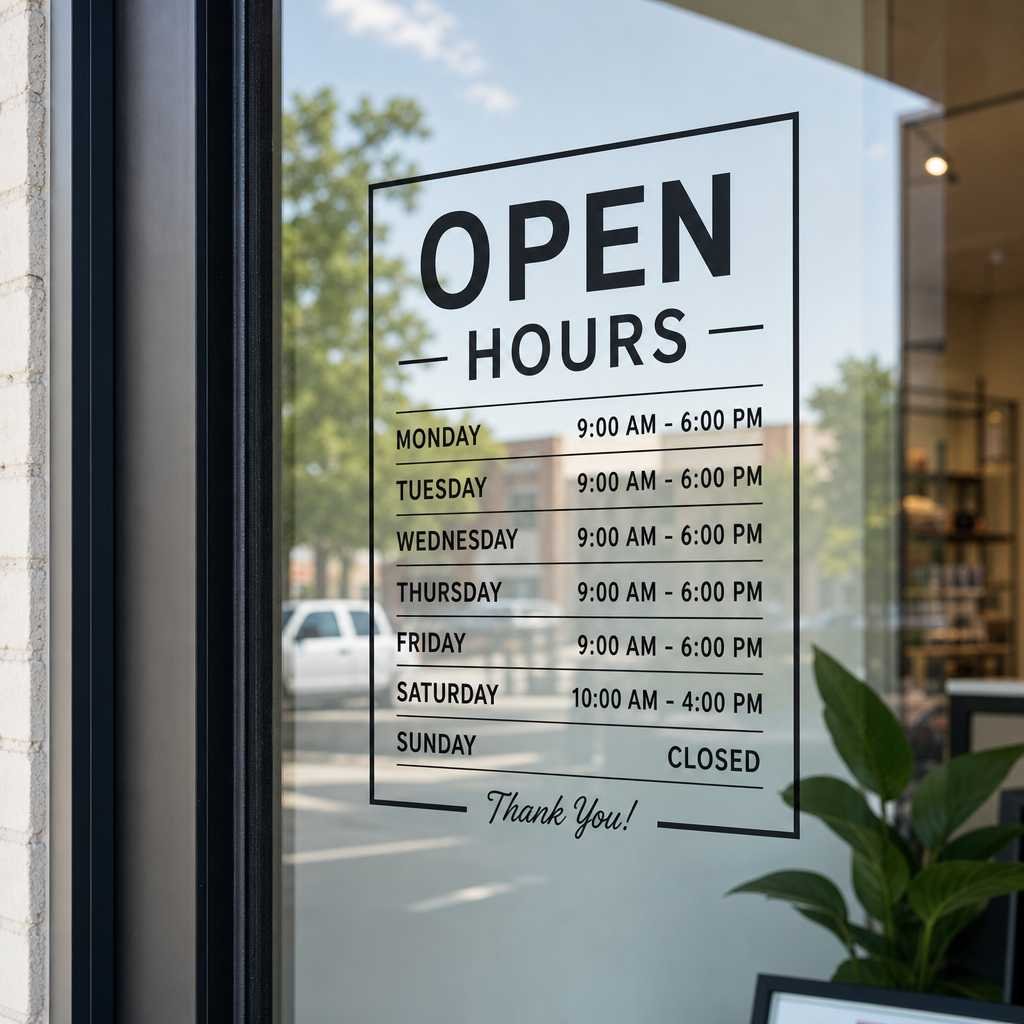
A crooked, bubble-riddled business hours sticker on your storefront window does not say “professional.” It says “rushed.” Studies on first impressions show that customers form opinions about a business in under seven seconds, and your window signage is one of the first things they evaluate. Knowing how to apply vinyl decal properly is not optional for business owners. It is a skill that directly affects how your brand is perceived. These seven tips walk you through a clean, bubble-free installation of your custom open hours decal, every single time.
Table of Contents
- Quick Takeaways
- Why Proper Installation Matters for Business Signage
- Tip 1: Clean the Surface Thoroughly Before Touching the Decal
- Tip 2: Control the Temperature of Your Application Environment
- Tip 3: Use the Hinge Method for Perfect Positioning
- Tip 4: Master the Squeegee Technique to Eliminate Bubbles
- Tip 5: Know When to Use Wet vs. Dry Application
- Tip 6: Remove the Transfer Tape and Backing at the Right Angle
- Tip 7: Post-Installation Care That Locks in Adhesion
The job is not finished when the transfer tape comes off. Post-installation care during the first 72 hours determines whether the decal achieves its full adhesion strength, which for ORACAL 651 vinyl is rated at 2,000+ hours of outdoor exposure and UV resistance when properly installed.The Critical 72-Hour Window
Do not apply any cleaning products to the glass within 72 hours of installation. Do not pressure wash the window. Do not expose a freshly installed exterior decal to heavy rain or direct sprinkler contact for the first 24 hours. The adhesive needs time to cold-flow into the surface texture of the glass.
After 72 hours, cleaning around the decal is fine. Use a soft cloth and non-ammonia glass cleaner. Avoid spraying cleaner directly onto the decal edges. Direct spray forces liquid under the edges over time and degrades the adhesive bond from the perimeter inward.
When cleaning the glass months later, wipe across the decal in one direction aligned with the text rather than perpendicular to it. Repeated perpendicular wiping picks at the edges of each letter, which is how crisp text edges become ragged over time even on high-quality vinyl.
Pro tip: If your open hours decal is on an exterior-facing surface, inspect the edges every three to six months and press down any lifting corners with your fingernail or a squeegee. Catching a lifted edge early prevents full peeling. An edge that has lifted 2mm can be pressed back down successfully. An edge that has lifted 10mm rarely re-adheres cleanly.Frequently Asked Questions
- References
Quick Takeaways
| Key Insight | Explanation |
|---|---|
| Surface prep is the most skipped step | Grease, dust, or cleaning residue will cause adhesion failure within weeks. Use 70% isopropyl alcohol, not glass cleaner. |
| Temperature range matters | ORACAL 651 vinyl adheres best between 60°F and 90°F. Applications below 50°F cause adhesive failure on glass surfaces. |
| The hinge method prevents misalignment | Taping the decal in place before peeling the backing eliminates the most common positioning mistakes during install business hours sticker jobs. |
| Bubbles after application are often fixable | Small air bubbles in quality vinyl like ORACAL 651 typically self-release within 48 to 72 hours at room temperature. |
| The squeegee direction matters | Always work from the center outward in overlapping strokes. Random squeegee motion traps air instead of pushing it out. |
| Wet application is not always better | Wet application suits large, solid decals on smooth glass. Small text-based open hours decals apply cleaner using the dry hinge method. |
| Do not clean with ammonia right after install | Ammonia-based glass cleaners degrade adhesive edges within the first 72 hours. Wait at least three days before cleaning around a new decal. |
Why Proper Installation Matters for Business Signage

A custom open hours decal from a premium supplier like The Retractable Banner Shop is produced using professional-grade ORACAL 651 vinyl, which means the material itself will not let you down. The failure point is almost always installation. Poor application technique produces bubbles, wrinkles, and misaligned text that make even a well-designed decal look amateurish.
In practice, the difference between a bubble-free install and a disaster install comes down to preparation. Most business owners rush the process because the decal itself looks simple. It is not. A glass storefront has oils from hands, residue from previous cleaning products, and temperature variations that all work against adhesion if you ignore them.
The good news is that none of these challenges require special skills. They require a consistent process. Follow these seven decal installation tips in order and your open hours decal will look professionally installed from day one.
Tip 1: Clean the Surface Thoroughly Before Touching the Decal
This is the step that separates successful installs from failed ones. A common mistake is wiping the glass down with whatever cleaning spray is nearby, which often means ammonia-based window cleaner. Ammonia leaves a thin film that actively repels vinyl adhesive.
What to Use and What to Avoid
Use 70% isopropyl alcohol applied with a lint-free microfiber cloth. Wipe the entire installation area in one direction, not in circles. Circles redistribute contamination rather than removing it. Let the surface dry completely, which takes about two to three minutes at room temperature.
Avoid paper towels, as they leave microscopic fibers. Avoid dish soap, as it leaves a surfactant residue. Avoid glass cleaner with ammonia for the reasons stated above. If the window has a waxy film from a previous decal, use a plastic razor scraper first, then follow with isopropyl alcohol.
Pro tip: After your isopropyl alcohol wipe, run a clean fingernail across the glass. If you hear a squeaking sound, the surface is clean enough. If you feel drag or hear nothing, repeat the cleaning step.
Tip 2: Control the Temperature of Your Application Environment
ORACAL 651 vinyl, which is the material used in The Retractable Banner Shop’s open hours decals, has a documented adhesive activation range. According to ORACAL’s own product specifications, ideal application temperature sits between 60°F and 90°F (15°C to 32°C). Outside this range, the pressure-sensitive adhesive does not flow properly into the microscopic texture of the glass surface.
Cold Weather Application Failures
Below 50°F, the adhesive becomes stiff and fails to bond on contact. The decal may appear to stick initially, but will lift at the edges within days. If you are installing during winter months on an exterior-facing window, apply from the inside of the glass where possible, or bring the glass surface up to room temperature first using a heat gun on the lowest setting.
Hot Weather Complications
Above 95°F, the adhesive becomes overly aggressive and tacky, which makes repositioning impossible if you misalign. Direct sunlight on glass can push surface temperatures well above 100°F on a warm day. Schedule outdoor installations for early morning or apply from the interior side of the glass to control this variable.
Tip 3: Use the Hinge Method for Perfect Positioning
The hinge method is the single most effective technique for installing any business hours sticker without guesswork. It eliminates the panic moment when you realize the decal is not straight after half of it has already stuck to the glass.
Step-by-Step Hinge Setup
First, position your decal exactly where you want it, with the backing still fully on. Use a level or the horizontal lines of the window frame as your guide. Once positioned, run a strip of masking tape vertically down the center of the decal. This tape becomes your hinge.
Fold one half of the decal back away from the glass while the hinge tape holds the other half in place. Cut or peel away the backing paper from the folded-back half only. Squeegee that half down, then flip the other half back and repeat. The result is a perfectly aligned decal with no repositioning guesswork.
Pro tip: Use blue painter’s tape as your hinge tape. It removes cleanly from the transfer tape without lifting the vinyl away from the carrier sheet, which matters especially on decals with fine lettering like store hours text.
Tip 4: Master the Squeegee Technique to Eliminate Bubbles
Most people squeegee randomly or press too hard in one spot. The correct squeegee motion for bubble-free vinyl application follows a specific pattern that physically pushes air toward the edges rather than trapping it in pockets.
Center-Outward Stroke Pattern
Start at the vertical center of the decal and make firm, overlapping horizontal strokes moving toward the right edge. Return to center and repeat toward the left edge. Then make diagonal strokes from the center toward each corner. This pattern ensures no air has anywhere to go except out the sides.
Apply firm, consistent pressure. A dedicated plastic squeegee tool works better than a credit card because it has a longer edge and distributes pressure more evenly. The squeegees included with many decal orders from shops like The Retractable Banner Shop work well for this purpose.

What to Do About Stubborn Bubbles
If a bubble remains after squeegeeing, do not panic. For ORACAL 651 vinyl on glass, small bubbles under 1/4 inch in diameter will typically self-release within 48 to 72 hours as the adhesive settles. Larger bubbles can be addressed with a very fine sewing needle: pierce the edge of the bubble at a 45-degree angle and press the air out with your fingertip, then re-squeegee the area.
Tip 5: Know When to Use Wet vs. Dry Application
There is genuine debate among vinyl installers about wet versus dry application. Both work. The question is which works better for your specific decal type.
Comparing Wet and Dry Application Methods
| Method | Best For | Biggest Risk |
|---|---|---|
| Dry Application (Hinge Method) | Small to medium decals, text-heavy designs like open hours stickers, single-color vinyl lettering | No repositioning once stuck; misalignment is permanent without lifting |
| Wet Application (Slip Method) | Large solid-color decals, full-window graphics, backgrounds with no fine text | Trapping water under fine lettering; extended dry time before adhesion is fully active |
| Dry Application (Direct Peel) | Very small decals, highly textured surfaces, short-term temporary installs | High chance of bubbles and misalignment without a hinge; not recommended for professional signage |
For an open hours decal with specific text like “Monday to Friday 9AM to 6PM,” dry application using the hinge method is the correct choice. The wet application method introduces moisture that can cause fine text edges to lift during the drying phase. Save wet application for large background panels.
“Proper surface preparation and correct application temperature account for over 80% of all vinyl adhesion failures in commercial signage installations.”
3M Commercial Graphics Division, Application Guide for Pressure-Sensitive Films
Tip 6: Remove the Transfer Tape and Backing at the Right Angle
This step causes more damage to finished decals than any other. Pulling the backing paper straight back at a 90-degree angle is the most common way to either tear fine lettering or cause the transfer tape to separate from the vinyl before the vinyl is pressed to the glass.
The 180-Degree Peel Technique
Always peel the backing paper back on itself at a near-180-degree angle, meaning fold the backing back parallel to the glass surface rather than pulling it away from the glass. This technique keeps the vinyl flat against the transfer tape and prevents the adhesive from stretching or distorting fine characters in your hours text.
For the transfer tape removal step after the decal is on the glass, apply heat from a hair dryer on a low setting for about 20 seconds over the transfer tape surface. This slightly warms the adhesive between the transfer tape and the vinyl, making it release cleanly without lifting your freshly installed decal.
Tip 7: Post-Installation Care That Locks in Adhesion
The job is not finished when the transfer tape comes off. Post-installation care during the first 72 hours determines whether the decal achieves its full adhesion strength, which for ORACAL 651 vinyl is rated at 2,000+ hours of outdoor exposure and UV resistance when properly installed.
The Critical 72-Hour Window
Do not apply any cleaning products to the glass within 72 hours of installation. Do not pressure wash the window. Do not expose a freshly installed exterior decal to heavy rain or direct sprinkler contact for the first 24 hours. The adhesive needs time to cold-flow into the surface texture of the glass.
After 72 hours, cleaning around the decal is fine. Use a soft cloth and non-ammonia glass cleaner. Avoid spraying cleaner directly onto the decal edges. Direct spray forces liquid under the edges over time and degrades the adhesive bond from the perimeter inward.
When cleaning the glass months later, wipe across the decal in one direction aligned with the text rather than perpendicular to it. Repeated perpendicular wiping picks at the edges of each letter, which is how crisp text edges become ragged over time even on high-quality vinyl.
Pro tip: If your open hours decal is on an exterior-facing surface, inspect the edges every three to six months and press down any lifting corners with your fingernail or a squeegee. Catching a lifted edge early prevents full peeling. An edge that has lifted 2mm can be pressed back down successfully. An edge that has lifted 10mm rarely re-adheres cleanly.
Frequently Asked Questions
How long should I wait before the decal is fully bonded to the glass?
Full adhesion for ORACAL 651 vinyl on smooth glass takes approximately 24 to 72 hours at room temperature. The decal will appear stuck immediately after installation, but the pressure-sensitive adhesive continues flowing into the surface texture during this period. Avoid cleaning or touching the decal edges for at least 72 hours after installation for best long-term results.
Can I reposition a vinyl decal if I get the placement wrong?
This depends on how much of the decal is already down. If you catch the mistake within the first few seconds and only a small portion has contacted the glass, you can carefully lift the edge using a plastic card and reposition. Once more than half the decal is applied, repositioning without damaging the vinyl is unlikely. This is why the hinge method in Tip 3 is non-negotiable for text-based decals like open hours stickers.
Why is my vinyl decal peeling at the edges after only a few weeks?
Edge lifting that fast is almost always caused by one of three things: surface contamination at the time of installation (oil, cleaning product residue), application at temperatures below 50°F, or using ammonia-based cleaner on the window within the first 72 hours. In most cases, the adhesive never fully bonded because the surface was not properly prepared. Remove the decal, clean the surface with 70% isopropyl alcohol, and re-apply using the hinge method at the correct temperature.
Is there a difference between installing a decal on inside-facing versus outside-facing glass?
Yes, and it is significant. Interior glass application is almost always easier because the temperature is controlled and there is no wind interference. It also protects the decal from direct weather exposure, extending its lifespan considerably. The trade-off is that interior-applied decals face outward through the glass, so the text must be printed in mirror-reverse to read correctly from the street. Reputable suppliers like The Retractable Banner Shop specify during the ordering process which orientation you need, so confirm this before your order is produced.
How do I remove an old open hours decal without damaging the glass?
Use a heat gun or hair dryer on medium heat, held about three inches from the surface, and work in small sections. Heat softens the adhesive and allows the vinyl to peel away without tearing. After the vinyl is removed, adhesive residue will remain. Remove it with a commercial adhesive remover like Goo Gone or with 70% isopropyl alcohol and a plastic scraper. Never use a metal razor blade on tempered glass, as it can cause micro-fractures that are invisible until thermal stress causes the pane to crack.
Do I need a professional squeegee tool or will a credit card work?
A credit card works in an emergency but produces noticeably worse results than a proper felt-edged squeegee tool. Credit cards have rigid corners that create pressure points and can scratch the transfer tape surface, which sometimes embosses the scratch pattern onto the vinyl underneath. A professional plastic squeegee with a felt edge is a $3 to $8 tool and is worth buying before you install a decal that cost you $20 to $50. Many signage suppliers include a squeegee with orders, so check before purchasing.
If you have recently installed a custom open hours decal on your storefront window, share which step gave you the most trouble and how you worked through it. Your experience helps other business owners get it right on the first try.
We would love your feedback and any insights you would share with others. What perspective would you add?
References
- Forbes Business Section: reporting on small business signage and customer first impression research
- Statista: consumer behavior and retail environment statistics relevant to physical storefront signage
- HubSpot Marketing Statistics: data on how physical brand presentation influences customer trust and purchase decisions
- OSHA Official Site: workplace safety guidelines relevant to chemical cleaning products used in surface preparation before vinyl application
- Penn State Extension: adhesive technology and material science resources covering pressure-sensitive adhesive performance in varying temperatures