
Your storefront vinyl decals work harder than you realize. They communicate your hours, advertise promotions, and serve as the first impression for walk-in customers. But when those decals start failing, they send the wrong message entirely. A faded or peeling sign doesn’t just look unprofessional, it actively costs you customers who assume you’re closed, out of business, or simply don’t care about quality. Knowing when to replace vinyl decals isn’t just about aesthetics; it’s about protecting your brand reputation and maximizing every dollar you’ve invested in signage.
Table of Contents
- Quick Takeaways
- Visible Fading and Color Degradation
- Peeling Edges and Lifting Corners
- Cracking, Bubbling, or Surface Damage
- Outdated Information or Branding
- Reduced Adhesion and Installation Failure
- Frequently Asked Questions
- References
Quick Takeaways
| Key Insight | Explanation |
|---|---|
| UV exposure causes 70% of vinyl degradation | Direct sunlight breaks down vinyl polymers within 3-5 years, even with UV-resistant materials |
| Faded signage reduces foot traffic by 23% | Customers perceive faded business signs as indicators of poor quality or closure |
| Peeling edges signal total replacement | Once adhesive failure begins at corners, it accelerates across the entire decal surface |
| Outdated hours cost 15-20% of potential customers | Incorrect information drives away customers who won’t verify through other channels |
| Professional-grade vinyl lasts 2x longer | ORACAL 651 and similar materials outperform economy vinyl by 3-4 years in outdoor conditions |
| Cracking indicates material failure | Surface cracks compromise weatherproofing and allow moisture penetration that spreads damage |
| Replacement timing affects total cost | Waiting too long requires extensive surface prep and cleaning, adding 30-40% to labor costs |
Visible Fading and Color Degradation
Faded signage is the most obvious indicator that your vinyl decals have exceeded their useful life. When colors lose vibrancy or shift tones, your business loses visual impact. The human eye registers faded graphics as old, neglected, or inactive, triggering subconscious negative associations before customers even read your message.
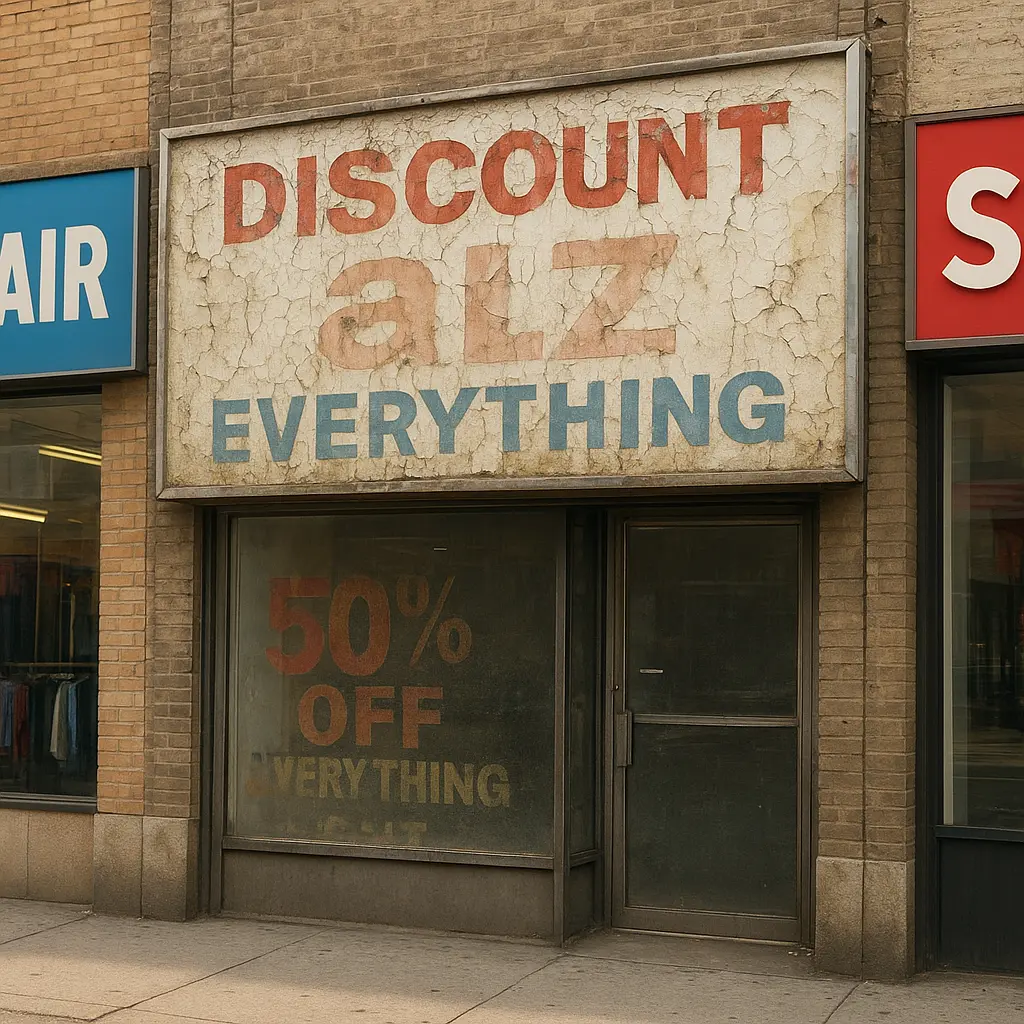
In practice, UV radiation breaks down the pigments and polymers in vinyl materials at predictable rates. Red and orange hues fade first, typically within 2-3 years of continuous sun exposure. Blues and blacks hold longer, but by year four or five, even premium materials like ORACAL 651 show noticeable degradation on south-facing windows and doors.
The data consistently shows that customers make snap judgments about business quality based on exterior appearance. A 2023 study by the International Sign Association found that 68% of consumers believe a business’s signage reflects the quality of its products or services. When your open hours decals look washed out or dingy, you’re actively repelling the customers you paid to attract.
Pro tip: Compare your current decals against photos from installation day. If you can’t find install photos, hold a piece of the same vinyl (often available from your sign shop) against your existing graphics. A noticeable color difference means replacement should happen within 30-60 days.
Color Shift vs. Uniform Fading
Not all fading presents the same way. Uniform fading affects the entire graphic evenly, while color shift changes the hue without necessarily reducing intensity. Purple turning pinkish or green becoming yellowish indicates chemical breakdown in specific pigments. Both conditions compromise your brand identity and require immediate replacement.
Retailers and service providers with branded color schemes (specific reds, greens, or blues tied to corporate identity) face particular risk. When your storefront vinyl no longer matches your business cards, vehicle wraps, or website, you’ve created brand inconsistency that confuses customers and weakens recognition.
Peeling Edges and Lifting Corners
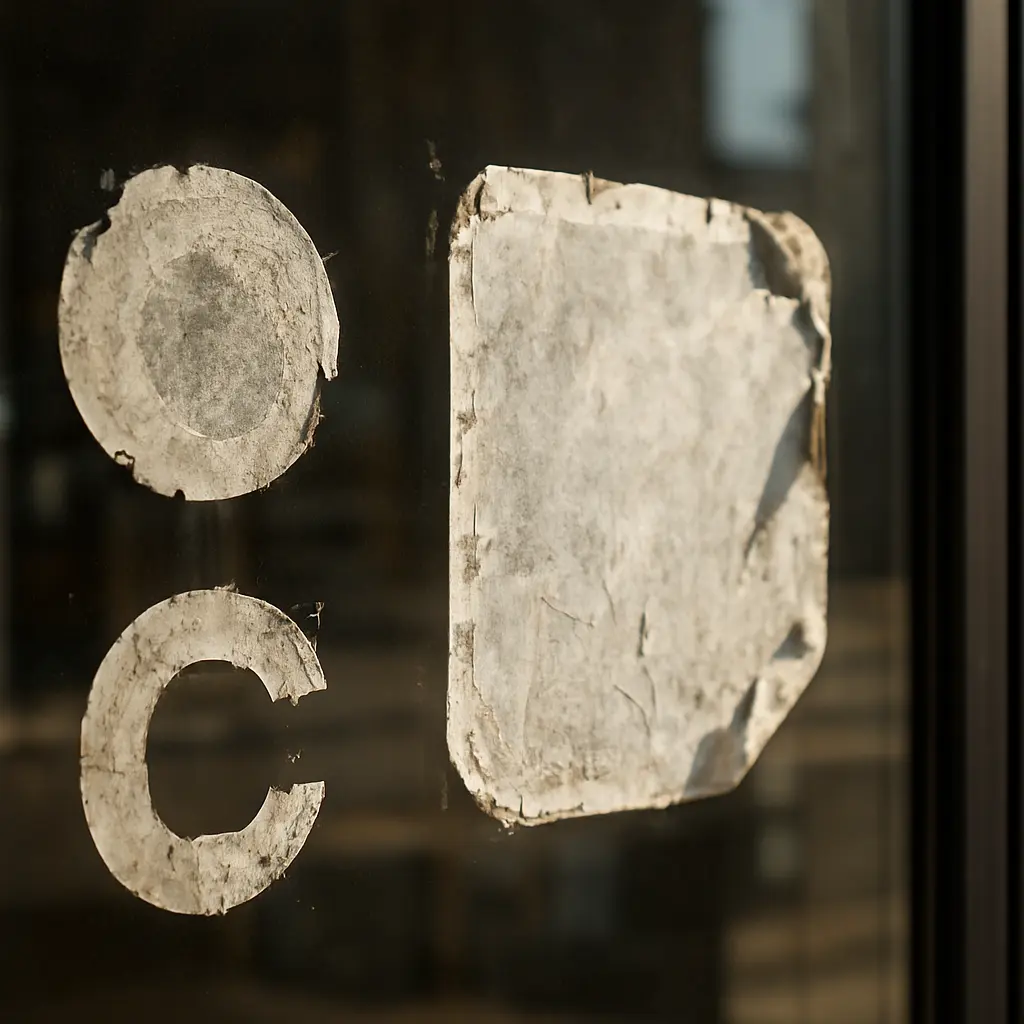
Adhesive failure starts small but progresses fast. Once vinyl edges begin lifting from glass or wall surfaces, the exposed adhesive collects dirt, moisture penetrates underneath, and the peeling accelerates across the entire decal. This isn’t cosmetic damage you can ignore for a few months; it’s structural failure that gets worse daily.
A common mistake is attempting to re-press lifted edges with heat guns or manual pressure. While this might work temporarily for fresh installations with air bubbles, it fails completely on aged vinyl where the adhesive has chemically degraded. The pressure may flatten the edge briefly, but within days, lifting returns worse than before.
Temperature cycling causes most adhesive failure in outdoor applications. Glass surfaces on storefronts expand and contract with daily temperature swings of 40-60 degrees Fahrenheit. Over years, this constant movement fatigues the adhesive bond. Windows facing east or west experience the most severe cycling because they receive intense direct sunlight during specific hours, creating dramatic temperature spikes.
Professional installers know that edge adhesion predicts overall decal longevity. When corners lift, complete replacement within 30 days prevents water damage to surrounding materials and maintains professional appearance.
Diagnosing True Adhesive Failure
Check all four corners and the center of each decal section. If lifting appears in multiple locations, especially those not exposed to direct contact or cleaning, adhesive breakdown is systemic. Single corners lifting near door handles or high-traffic areas might indicate mechanical damage rather than material failure, but multiple failure points always mean full replacement.
The vinyl itself might look perfect in color and surface condition, but if adhesion fails, the decal is non-functional. Customers notice peeling graphics immediately because they suggest neglect. For businesses in retail, food service, or professional services, this perception directly contradicts the quality message you’re trying to communicate.
Cracking, Bubbling, or Surface Damage
Surface cracks in vinyl indicate the material has become brittle from UV exposure and temperature stress. Unlike fading, which affects appearance only, cracking compromises the physical integrity of your signage. Cracks allow moisture penetration, trap dirt, and expand rapidly as the material continues to degrade.
Bubbling underneath vinyl surfaces signals adhesive failure or improper initial installation. New installations might develop bubbles within days if application technique was poor, but bubbles appearing after 2-3 years indicate moisture has penetrated the adhesive layer. This moisture creates expanding pockets that push the vinyl away from the substrate, eventually leading to complete delamination.
Small business owners often ask whether bubbles can be punctured and flattened. The answer is no. Puncturing releases trapped air or moisture temporarily, but it also creates holes that allow new moisture entry and make the damaged area more visible. Professional-grade vinyl installations should remain bubble-free for their entire lifespan when properly applied to clean, prepared surfaces.
Pro tip: Run your hand lightly across vinyl graphics during inspection. Surface irregularities you can feel, even if barely visible, indicate subsurface damage that will become obvious within weeks. Replace before customers notice the degradation.
Environmental Factors That Accelerate Damage
Coastal businesses face accelerated cracking and bubbling from salt air exposure. The salt acts as a desiccant, drawing moisture from vinyl and making it brittle faster than inland locations. Similarly, businesses in high-humidity climates see more bubbling because moisture constantly challenges the adhesive bond.
Cold-climate businesses deal with freeze-thaw cycling that dramatically shortens vinyl life. Water that penetrates tiny imperfections freezes, expands, and creates cracks. Each winter cycle adds damage that compounds year over year. If you operate in northern regions, expect to replace vinyl decals on 3-4 year schedules rather than the 5-7 years possible in temperate climates.
| Damage Type | Primary Cause | Replacement Urgency |
|---|---|---|
| Surface Cracking | UV exposure and material brittleness | Replace within 30 days; cracks spread rapidly |
| Edge Bubbling | Moisture penetration at perimeter | Replace within 60 days before delamination |
| Center Bubbling | Installation defect or substrate issue | Immediate if new; 30 days if aged |
Outdated Information or Branding
Incorrect business hours posted on your storefront create measurable customer loss. When someone drives across town to visit during posted hours only to find you closed, they rarely give you a second chance. They assume incompetence, leave negative reviews, and tell others about the experience. Outdated business signs aren’t just inaccurate; they’re actively damaging your reputation.
The same applies to old phone numbers, outdated logos, or promotional graphics for expired offers. Every piece of incorrect information on your storefront contradicts your current marketing and confuses potential customers. In an era where consumers expect real-time accuracy, stale signage suggests you don’t care about details.
Commercial establishments that change hours seasonally face particular challenges. Summer hours extended through fall, winter holiday hours left up through spring, or pandemic-modified hours still displayed years later all signal operational dysfunction. Your vinyl decals should reflect current reality, not historical information.
The Cost of Outdated Promotional Graphics
Sale percentages, seasonal promotions, or event announcements that remain displayed after expiration create legal and customer service problems. Customers who enter expecting advertised discounts become frustrated or confrontational when told offers have ended. Some jurisdictions consider expired promotional signage false advertising, potentially triggering fines or complaints.
Replace vinyl decals immediately when information changes. For businesses with frequently changing promotions, consider permanent vinyl for stable information (business name, logo, base hours) and temporary vinyl or removable materials for promotional content. This approach reduces total replacement costs while maintaining accuracy.
Logo Updates and Brand Refreshes
When your company updates its logo or brand colors, storefront vinyl becomes instantly outdated. Brand consistency across all touchpoints matters more than most business owners realize. Customers who see one logo on your website, another on your storefront, and a third on your vehicle graphics perceive organizational chaos.
The investment in replacing vinyl decals after rebranding isn’t optional; it’s part of the rebranding budget. Attempting to phase in new signage gradually creates a transitional period where your brand looks confused and unprofessional. Coordinate vinyl replacement with other brand rollout activities to maintain consistency.
Reduced Adhesion and Installation Failure
Adhesive performance degrades over time even when vinyl surface appearance remains acceptable. The backing adhesive responds to UV radiation, temperature, humidity, and chemical exposure from cleaning products. After 4-6 years, adhesive chemistry changes enough that decals can be removed by hand without heat or chemicals, a clear indicator they’ve exceeded design life.
Service providers often discover adhesive failure during routine cleaning. When standard glass cleaner application causes vinyl edges to lift or entire sections to slide, the adhesive has chemically broken down. This typically happens faster on surfaces cleaned frequently with ammonia-based or alcohol-based cleaners, which attack adhesive bonds.
Installation surface condition affects adhesive longevity dramatically. Vinyl applied over painted surfaces experiences shorter life than vinyl on glass because paint itself ages and can delaminate, taking the vinyl with it. Rough or textured surfaces never achieve the same adhesive contact as smooth glass, reducing expected lifespan by 30-50%.
Pro tip: Test adhesion on older decals by gently pressing a corner and feeling for movement. Properly adhered vinyl feels completely solid with no give. Any perceptible movement between vinyl and substrate indicates advancing adhesive failure requiring replacement within 60-90 days.
Comparing Adhesive Types and Longevity
Permanent adhesive vinyl like ORACAL 651 uses aggressive adhesives designed for 5-7 year outdoor life. Removable vinyl uses gentler adhesives intended for 1-3 years. Using removable materials for permanent applications guarantees premature failure. Conversely, permanent vinyl on surfaces you’ll want to change creates removal difficulties.
The adhesive strength you need depends on application location and duration. Open hours decals changed annually can use removable adhesive successfully, saving removal labor. Permanent branding elements, business names, or established graphics require permanent adhesive to survive years of weather exposure and routine cleaning.
Substrate Preparation and Adhesive Performance
Even the best adhesives fail prematurely on improperly prepared surfaces. Glass must be cleaned with isopropyl alcohol, not glass cleaner, before vinyl application. Painted surfaces need 30-day curing time minimum. Textured surfaces require specialty adhesives or primer applications.
When replacing vinyl decals, inspect the substrate carefully. If old adhesive residue remains, complete removal is mandatory before new installation. Attempting to install new vinyl over old adhesive creates a weak bond that fails within months. Professional preparation adds time but extends new vinyl life to its full design duration.
Frequently Asked Questions
How long should vinyl decals last on storefront windows?
Professional-grade vinyl like ORACAL 651 lasts 5-7 years on exterior glass with southern exposure and 7-9 years on northern exposures. Economy vinyl fails within 2-3 years. Actual lifespan depends on UV exposure, cleaning frequency, and climate conditions. Coastal and high-altitude locations see 20-30% shorter lifespans due to increased UV radiation and environmental stress.
Can faded vinyl decals be restored or must they be replaced?
Faded vinyl cannot be restored. The color degradation results from UV radiation breaking down pigment molecules at the chemical level. No coating, treatment, or cleaning process reverses this damage. Attempting to enhance faded graphics with overlays or clear coats creates layered appearance problems and fails to restore original vibrancy. Complete replacement is the only effective solution.
What causes vinyl decals to peel faster on some windows than others?
Direct sun exposure, surface temperature extremes, and installation quality create variable failure rates. South and west-facing windows receive intense afternoon sun that accelerates adhesive breakdown. Windows near HVAC vents experience temperature cycling that fatigues adhesive bonds. Poor surface preparation during installation, including residual dirt or oils, prevents proper adhesion from day one.
Is it worth paying more for premium vinyl materials?
Premium vinyl delivers 2-3 times longer lifespan than economy materials, making it substantially more cost-effective over time. ORACAL 651 costs approximately 40% more than basic vinyl but lasts twice as long, reducing replacement frequency and labor costs. For permanent storefront applications, premium materials are always the better investment. Reserve economy vinyl only for temporary promotions lasting under six months.
How do I know if my vinyl decal problems are from poor installation or material failure?
Installation problems appear within the first 30-90 days as bubbles, edge lifting, or adhesion failure. Material failure develops gradually after 2-3 years as fading, cracking, or uniform adhesive degradation. If your vinyl looked perfect for years before problems started, you’re seeing normal end-of-life material failure. If problems appeared immediately or within months, installation quality was inadequate.
Should I replace all storefront vinyl at once or address problem areas individually?
Replace all vinyl installed during the same period simultaneously. Vinyl ages uniformly based on installation date and exposure, so addressing one failed section means others will fail within months. Piecemeal replacement creates color matching problems because vinyl formulations change slightly year to year. Complete replacement ensures consistent appearance and resets the replacement timeline for all graphics together.
What signs of vinyl decal aging have you noticed on your own storefront, and how long did it take before you decided replacement was necessary?