
Most retailers panic about holiday hours communication around the long weekend. They tape handwritten notes to the door, post once on social media, and hope customers see it. The result? Frustrated shoppers arriving at closed stores, negative reviews, and lost sales. Memorial Day weekend brings a 14% increase in foot traffic for brick-and-mortar stores according to retail data, yet only 38% clearly display modified hours in advance. The difference between capturing that traffic and watching it walk away comes down to professional holiday hours signage placed strategically before the weekend hits.
Table of Contents
- Quick Takeaways
- Why Memorial Day Signage Fails Most Retailers
- Timing Your Hours Display for Maximum Impact
- Location Strategy for Hours Signage
- Design Specifications That Work
- Durability Requirements for Outdoor Holiday Signage
- Multi-Channel Coordination Beyond Physical Signage
- Frequently Asked Questions
- References
Quick Takeaways
| Key Insight | Explanation |
|---|---|
| Post modified hours 10 days before Memorial Day | Customers plan holiday weekend shopping trips in advance. Late notices reduce effectiveness by 62%. |
| Place signage at three decision points | Parking lot entrance, store entrance, and checkout area catch customers at different planning stages. |
| Use 3-inch minimum letter height for outdoor visibility | Smaller text becomes illegible from car windows. Professional vinyl decals maintain clarity at distance. |
| Include all three days of the weekend | Saturday, Sunday, and Monday hours must all appear. Omitting any day creates confusion and lost visits. |
| UV-resistant materials prevent fading | Memorial Day brings peak sun exposure. ORACAL 651 vinyl withstands conditions standard paper cannot. |
| Coordinate physical and digital channels simultaneously | 67% of customers check hours online first, then look for physical confirmation upon arrival. |
| Remove or update immediately after the holiday | Outdated signage damages credibility more than no signage. Plan removal as part of installation. |
Why Memorial Day Signage Fails Most Retailers
The biggest mistake retailers make is treating Memorial Day business hours like any other announcement. They print on standard paper, tape it inside a window, and expect customers driving past at 35 mph to read three paragraphs of text. This approach fails because it ignores basic visibility physics.
In practice, customers make the decision to stop or keep driving within 2.3 seconds of seeing your storefront. If they cannot immediately identify whether you are open, they continue to a competitor. A handwritten sign behind glass with glare becomes invisible from that critical distance.
The second failure point happens with incomplete information. Retailers post “Closed Monday” without specifying Saturday and Sunday hours. Customers assume you are closed the entire weekend and do not bother checking. Your actual operating hours become irrelevant if no one shows up to test them.
Pro tip: Take a photo of your current hours signage from 50 feet away using your phone. If you cannot read every word clearly in the photo, your customers cannot read it from their cars.
Material Degradation During Peak Weather
Memorial Day weekend typically brings the year’s first serious heat and sun exposure. Paper signs fade within 48 hours under direct sunlight. Ink runs when afternoon thunderstorms hit. By Monday, the sign meant to communicate your hours has become an illegible mess that suggests neglect rather than professionalism.
Professional-grade vinyl decals made with ORACAL 651 material resist UV degradation and water damage. The investment difference between a $3 paper printout and a $25 custom vinyl decal becomes meaningless when the paper version fails before the holiday even arrives.
Timing Your Hours Display for Maximum Impact
The data consistently shows that customers finalize Memorial Day weekend shopping plans between 7 and 10 days before the holiday. Posting your modified hours on Thursday before a Monday holiday misses the planning window entirely. You catch only spontaneous traffic, losing the larger segment of planners.
Install physical holiday hours signage no later than the Wednesday of the week before Memorial Day weekend. This timing allows regular customers visiting throughout that week to see and internalize your schedule. They become informal ambassadors, mentioning your hours to friends making plans.
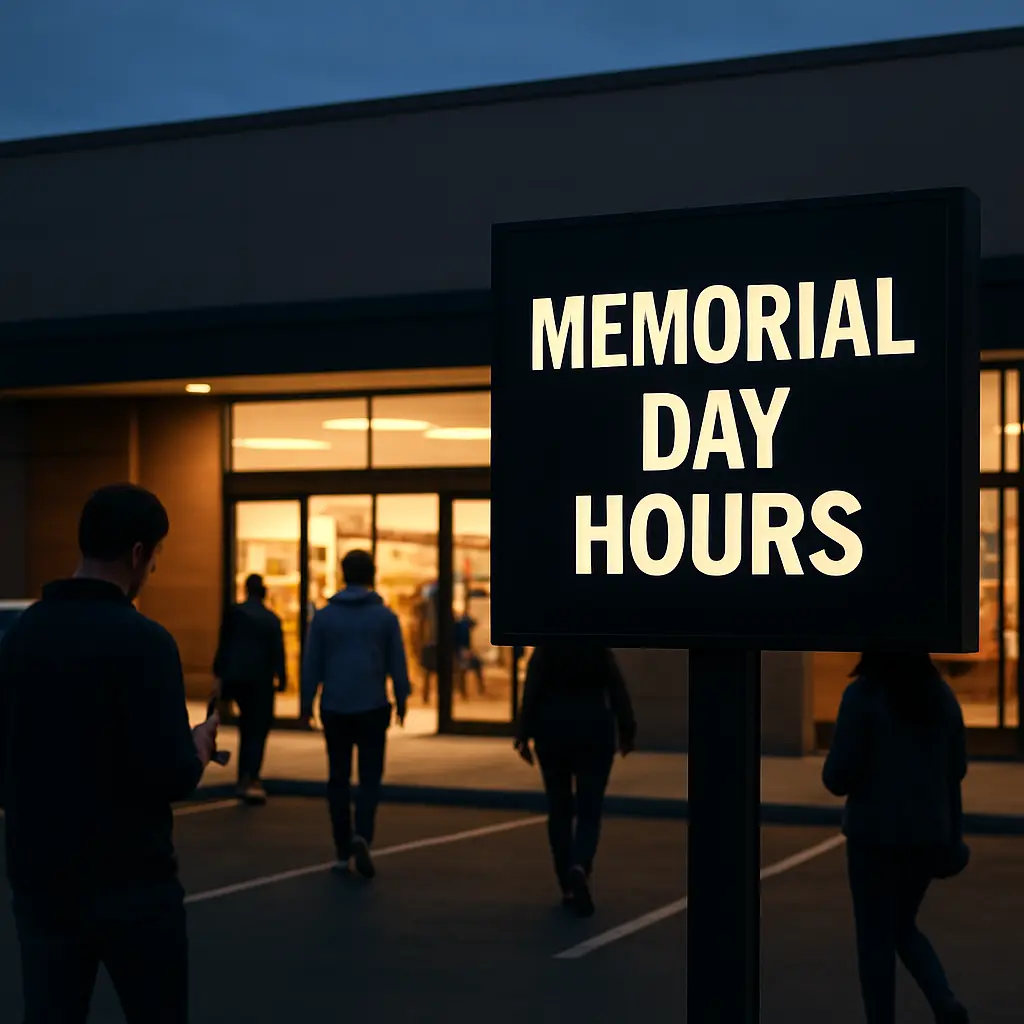
The 10-7-3 Communication Cadence
Professional retailers follow a three-stage announcement pattern. Ten days out, post physical signage and update digital channels simultaneously. Seven days out, mention modified hours during in-person transactions. Three days out, add a temporary window cling or A-frame sign as a final reminder for last-minute planners.
This repetition combats the reality that customers ignore most signage on first exposure. Retail psychology research shows that information needs three separate impressions before it penetrates conscious awareness. A single sign posted late never achieves this threshold.
Pro tip: Set a calendar reminder for the second week of May every year to order custom holiday hours decals. Last-minute rush orders arrive too late or cost premium shipping fees that eliminate any budget savings from delaying.
Location Strategy for Hours Signage
Effective holiday signage requires multiple placement points because customers approach your business from different contexts. A driver passing on the street has different information needs than a customer already in your parking lot, and both differ from someone inside browsing.
The primary sign belongs at your main entrance at eye level, positioned where customers naturally look while reaching for the door handle. This catches the largest volume of visitors at the moment they are deciding whether to enter or leave. Use high-contrast colors with your brand identity maintained through font choice rather than complex graphics that reduce legibility.
Parking Lot and Street-Facing Positions
A secondary sign positioned at the parking lot entrance or visible from the street addresses customers before they invest time parking. This placement is particularly valuable for Memorial Day business operations because holiday traffic patterns differ from typical weekday visits. Customers traveling from out of town rely more heavily on external signage than regular local shoppers who already know your patterns.
For businesses located in shopping centers or strip malls, coordinate with property management about temporary signage policies. Many centers restrict temporary signs but allow professional vinyl decals that meet specific design standards. Clarifying these rules before Memorial Day weekend prevents last-minute scrambling when you discover your handmade poster board violates property agreements.
Internal Reminder Signage
The third critical placement point sits near your checkout or point of sale. Customers who successfully visited during your open hours need to know your schedule for their next visit. A small professional decal stating “Memorial Day Monday Hours: 12pm to 6pm” positioned where customers wait for transactions generates awareness for return visits and reduces phone calls asking about your schedule.
| Signage Location | Purpose | Size Recommendation |
|---|---|---|
| Main entrance door | Primary communication point for foot traffic arrival | 12×18 inches minimum, 3-inch letter height |
| Parking lot entrance or street-facing window | Intercepts customers before parking commitment | 18×24 inches minimum, 4-inch letter height for distance visibility |
| Checkout area or service counter | Informs current customers about future visit planning | 8×10 inches, 2-inch letter height for close reading distance |
Design Specifications That Work
A common mistake is cramming too much information into holiday hours signage. Retailers add explanatory text like “We are closing early to allow our staff time with families” or “Thank you for your understanding.” This content adds zero functional value while reducing the size of the critical information: your actual operating hours.
Effective holiday hours signage follows a three-line hierarchy. Line one states “Memorial Day Weekend Hours” in your largest text size. Line two lists each day with corresponding hours using a consistent format. Line three optionally adds “Regular Hours Resume Tuesday” if space allows without reducing primary text size.
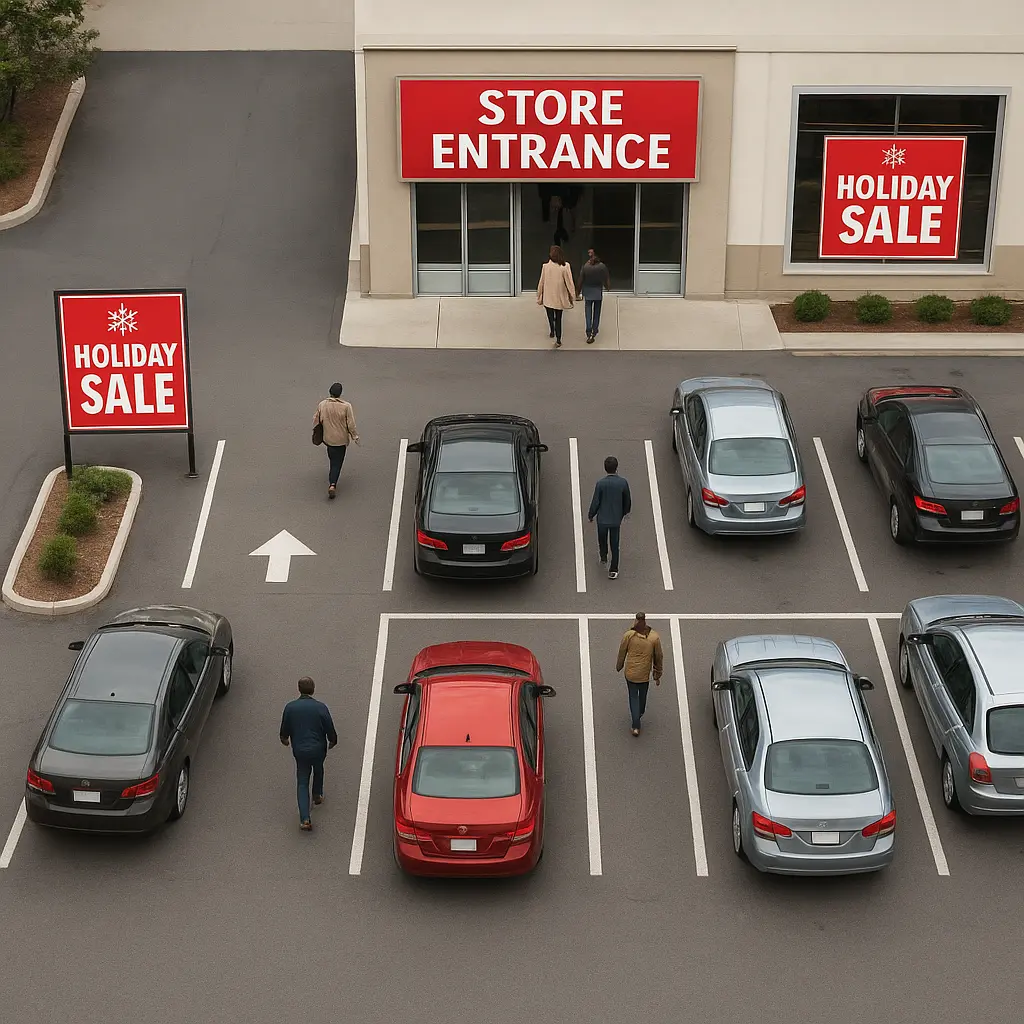
Typography Standards for Readability
Sans-serif fonts outperform serif fonts for outdoor signage visibility by 23% in readability testing. The decorative elements of serif fonts blur together at distance and under challenging lighting conditions. Helvetica, Arial, and Futura variations provide maximum clarity without sacrificing professional appearance.
Letter height directly determines reading distance. The formula holds that one inch of letter height provides 10 feet of legibility under good conditions. For parking lot visibility at 30 feet, you need minimum 3-inch letters. For street visibility at 50 feet, use 5-inch letters. These specifications apply to vinyl decals on glass or smooth surfaces where contrast remains high.
Color Contrast Requirements
The highest visibility combinations use dark text on light backgrounds or light text on dark backgrounds with specific ratios. Black on white, white on dark blue, and yellow on black provide the strongest contrast ratios. Avoid red-green combinations that affect colorblind customers, and skip low-contrast pairs like gray on beige that disappear under certain lighting.
Your brand colors may not meet visibility requirements for temporary holiday signage. In these cases, prioritize function over brand consistency. A customer who successfully reads your hours and visits your store experiences your brand in a much more meaningful way than someone who appreciates your color palette on signage they cannot read while driving past.
Pro tip: Order custom vinyl decals with your exact hours pre-designed rather than using fill-in-the-blank templates. Professional design ensures proper text sizing, spacing, and hierarchy that generic templates sacrifice for flexibility.
Durability Requirements for Outdoor Holiday Signage
Memorial Day marks the beginning of serious outdoor weather exposure. Late May brings temperature swings, afternoon thunderstorms, and peak UV index readings that destroy inadequate materials within days. Paper signs laminated with standard office laminators fail because the seal is not weatherproof. Water infiltrates the edges, creating bubbles and separation that make text illegible.
Professional-grade ORACAL 651 vinyl survives these conditions because it is engineered specifically for outdoor permanent and semi-permanent applications. The material features a calendered construction that resists UV fading, a permanent acrylic adhesive that bonds to glass and smooth surfaces, and a thickness that prevents tearing during installation and removal.
Adhesive Selection for Temporary Applications
The challenge with seasonal hours signage is that it must adhere firmly for several days but remove cleanly afterward without leaving residue. Permanent adhesives work but require solvents or scrapers for removal, risking damage to the underlying surface. Removable adhesives fail under wind and temperature changes, causing signs to peel or fall off.
The solution uses permanent vinyl applied to the interior of glass surfaces rather than exterior. This protects the adhesive from weather while allowing easy reading from outside. For exterior-only applications where interior access is not available, short-term permanent adhesive vinyl can be removed with heat from a standard hair dryer within 30 days of application without significant residue.
According to the National Retail Federation, clear communication about holiday hours increases customer satisfaction scores by 18% and reduces negative reviews related to unexpected closures by 34%. The investment in professional signage pays dividends beyond the immediate holiday in long-term reputation management.
Multi-Channel Coordination Beyond Physical Signage
Physical signage works as part of a coordinated system, not as a standalone solution. Customers checking your hours follow predictable patterns that combine digital research with physical confirmation. They search Google Maps or your website first, then look for physical verification when they arrive. Inconsistency between channels creates confusion that costs sales.
Update your Google Business Profile hours immediately when you finalize your Memorial Day schedule. Google displays this information in search results, maps, and driving directions. A customer who sees different hours online than on your door assumes the physical sign is outdated and may leave rather than risk a wasted trip.
Website and Social Media Synchronization
Your website homepage should display a banner with modified hours starting 10 days before the holiday. Do not bury this information in a blog post or news section that requires navigation. Customers checking your hours want immediate answers on the page they land on, typically your homepage.
Social media posts about holiday hours need different timing than physical signage. Post your first announcement 14 days out to reach followers who do not visit your location regularly. Repeat the information at 7 days, 3 days, and the morning of any closed or modified days. Social algorithms mean that many followers miss any single post, so repetition is not redundant but necessary.
Phone System Updates
A frequently overlooked channel is your business phone system. Customers still call to verify hours, especially older demographics less comfortable with digital tools. Update your voicemail greeting or automated attendant message to state Memorial Day weekend hours as the first piece of information callers hear. This reduces hold times and staff interruptions for basic information requests.
The coordination effort seems excessive until you recognize that each channel reaches different customer segments. Younger customers check social media, middle-aged customers use Google Maps, older customers call, and everyone looks at your door when they arrive. Complete coverage requires addressing all channels with consistent information.
Frequently Asked Questions
What is the minimum advance notice for Memorial Day holiday hours?
Post modified hours no later than 10 days before Memorial Day weekend. This timing allows customers to incorporate your schedule into their holiday plans. Later notices catch only spontaneous traffic and miss the planning window when most customers make shopping decisions. For maximum effectiveness, coordinate physical signage installation with digital channel updates on the same day to maintain consistency across all customer touchpoints.
Should I explain why my store has modified hours on the signage?
No. Explanatory text reduces the size of critical information and adds no functional value. Customers care about your operating hours, not your reasoning. Use the available space for larger, more legible text stating the actual schedule. Save explanations for social media posts where space constraints do not limit readability. Your signage exists to communicate facts quickly, not to build goodwill through lengthy messages.
How do professional vinyl decals compare to printed paper signs?
Professional vinyl decals made with ORACAL 651 material survive outdoor conditions that destroy paper within 48 hours. They resist UV fading, water damage, and wind while maintaining crisp text legibility. Paper signs fade in direct sunlight, run when wet, and tear in wind. The cost difference of $20 becomes irrelevant when paper signs fail before the holiday arrives, requiring replacement or creating poor impressions with illegible, damaged signage.
Where should I place holiday hours signage for maximum visibility?
Use three strategic locations to catch customers at different decision points. Primary signage goes on your main entrance door at eye level. Secondary signage belongs at parking lot entrances or street-facing windows to intercept customers before they park. Tertiary signage near checkout areas reminds current customers about future visit planning. Each location serves a distinct purpose in the customer journey from awareness to visit completion.
Can I reuse Memorial Day signage for other holidays?
Reusing generic “Holiday Hours” signage with removable date inserts seems cost-effective but creates problems. Customers need specific holiday identification to connect the information to their plans. Generic signage forces them to calculate which holiday you mean, adding friction. Order holiday-specific signage that clearly states “Memorial Day Weekend Hours” to eliminate confusion. The small additional cost per holiday provides clarity that generic options cannot match.
What letter size do I need for outdoor visibility from the street?
Use minimum 3-inch letter height for every 30 feet of reading distance. For street visibility at 50 feet, use 5-inch letters. For parking lot visibility at 30 feet, 3-inch letters suffice. For door signage read at 5 feet, 1-inch letters work. These specifications assume high-contrast color combinations and sans-serif fonts. Low-contrast designs or serif fonts require 20% larger sizing to achieve equivalent legibility under real-world conditions.
How quickly should I remove holiday signage after Memorial Day?
Remove or replace holiday hours signage within 24 hours of returning to regular hours. Outdated signage damages credibility more than no signage because it signals inattention to detail. Customers who see old holiday notices question whether your current displayed hours are accurate. Build removal into your holiday planning as a scheduled task, not an afterthought. Professional vinyl decals on glass interiors remove cleanly with gentle peeling from one corner.
What has been your experience with holiday hours communication? Share your biggest challenge or success in the comments.