
Your vehicle graphics are working around the clock to promote your business, but faded vinyl and peeling edges send the wrong message. Professional-grade vehicle decal maintenance extends the life of your mobile advertising by up to five years, protecting your investment and ensuring your brand stays crisp. The difference between decals that look fresh after three years and those that fail after six months comes down to a consistent care routine that most business owners overlook until it’s too late.
Table of Contents
- Quick Takeaways
- Why Vehicle Decal Maintenance Matters
- Weekly Cleaning Protocol
- Seasonal Maintenance Requirements
- Common Damage Causes and Prevention
- Cleaning Products That Work vs. Products That Destroy
- Professional vs. DIY Care Approaches
- Frequently Asked Questions
- References
Quick Takeaways
| Key Insight | Explanation |
|---|---|
| Temperature affects adhesive strength | Vinyl decals lose adhesion above 180°F and become brittle below 20°F, requiring seasonal care adjustments |
| Weekly cleaning prevents 80% of damage | Regular removal of road grime and contaminants stops chemical breakdown before it starts |
| Wrong cleaners void warranties | Petroleum-based products, acetone, and abrasive cleaners permanently damage ORACAL 651 vinyl within minutes |
| Edge inspection catches early failures | Lifting edges at seams indicate adhesive failure that spreads rapidly if not addressed within 48 hours |
| UV exposure accumulates over time | South-facing and horizontal surfaces age 3x faster than shaded areas, requiring protective treatments |
| Professional vinyl lasts 5-7 years | ORACAL 651 vinyl with proper maintenance outlasts budget materials by 200-300% in outdoor applications |
| Wax selection impacts longevity | Carnauba-based waxes protect vinyl, while synthetic polymer sealants can cause discoloration and hazing |
Why Vehicle Decal Maintenance Matters
Vehicle graphics represent a cost-per-impression that beats nearly every other advertising channel. A single vehicle generates between 30,000 and 70,000 daily impressions according to the Outdoor Advertising Association of America. When your decals look worn, those impressions work against you.
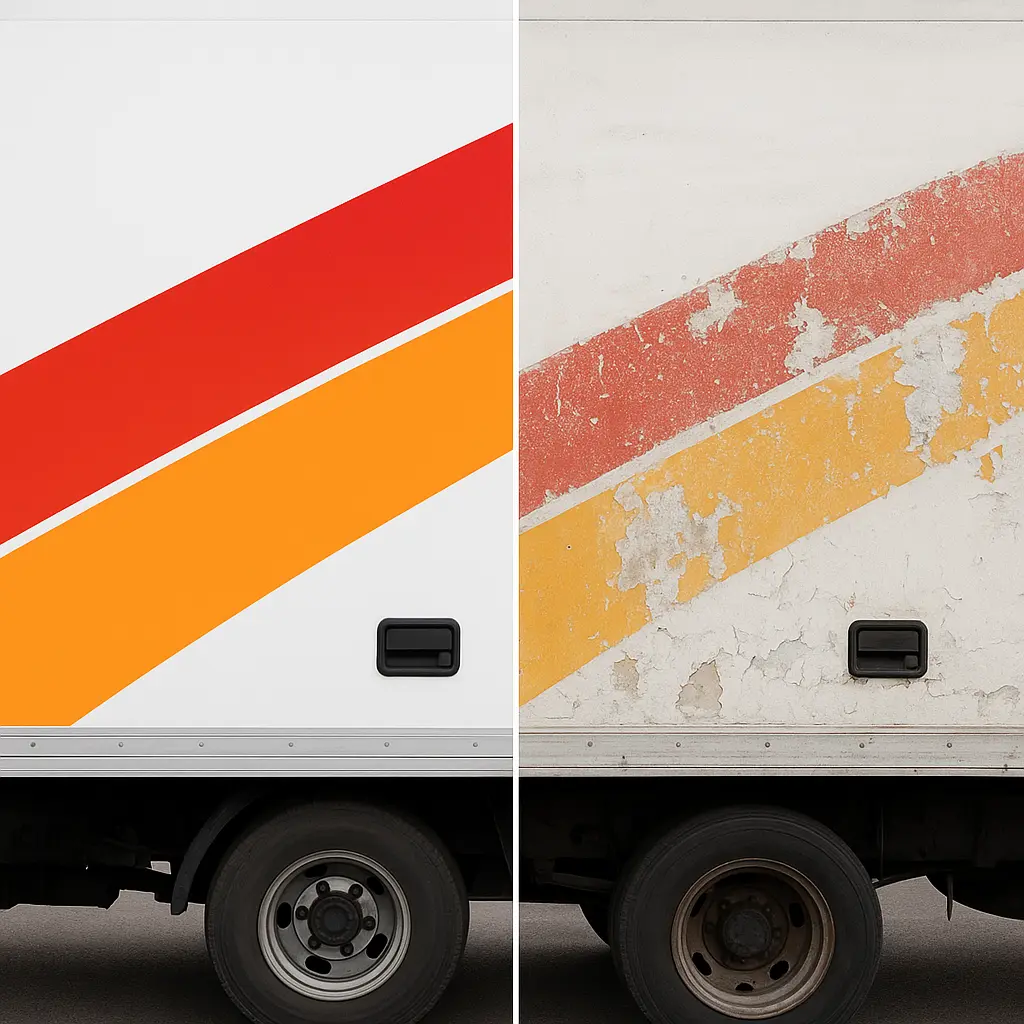
The return on investment collapses when vinyl care gets ignored. A $500 vehicle graphics installation that lasts two years instead of five costs you 150% more per year. Business owners who implement systematic maintenance protocols report graphics that maintain 90% of their original appearance after three years of daily exposure.
In practice, the businesses that struggle most with vehicle graphics longevity are those that either over-clean with harsh products or neglect cleaning entirely. Both extremes cause premature failure. The data consistently shows that moderate, consistent care using proper techniques and products delivers the best outcomes.
Weekly Cleaning Protocol
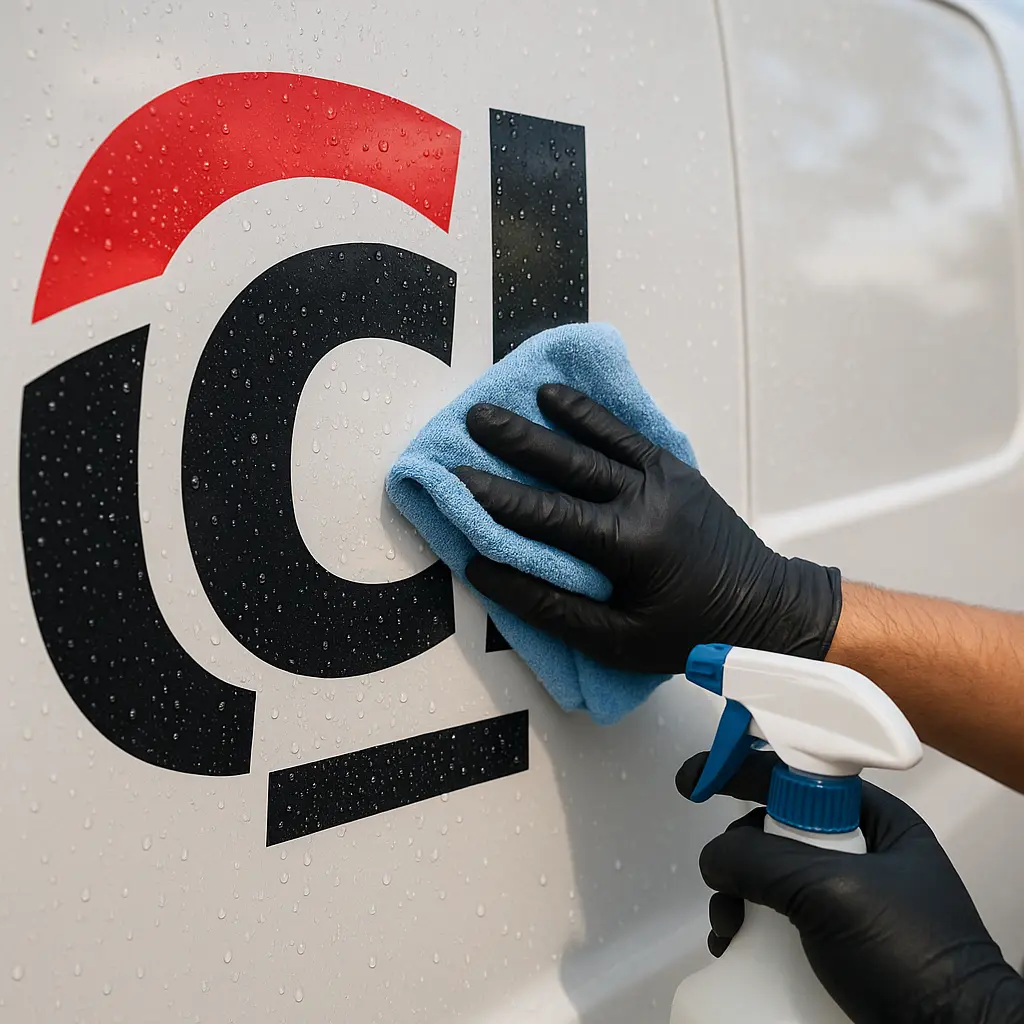
Start with a two-bucket system: one with pH-neutral soap solution, one with clean rinse water. This prevents contaminant redeposition that causes micro-scratching. Your soap concentration should be minimal, typically one ounce per gallon of water. Stronger solutions leave residues that attract dirt and break down adhesives.
Vehicle graphics cleaning requires soft materials exclusively. Microfiber cloths with at least 300 GSM weight provide enough absorbency without surface abrasion. Avoid terry cloth towels, which contain loops that catch on vinyl edges and cause lifting.
The washing sequence matters more than most installers admit. Always work from top to bottom, allowing gravity to carry contaminants downward. Rinse each section immediately after washing, before soap dries. Dried soap leaves alkaline deposits that yellow white vinyl and fade colors over time.
Water Temperature and Pressure Guidelines
Use lukewarm water between 70-90°F for optimal cleaning without thermal shock. Cold water doesn’t dissolve road film effectively, while hot water above 110°F softens adhesives and can cause edge lifting on graphics less than six months old.
Pressure washers destroy vehicle decals when used incorrectly. Keep the nozzle at least 12 inches from vinyl surfaces and never exceed 1,200 PSI. Direct the spray at a 45-degree angle, never perpendicular to edges or seams where water can penetrate behind the vinyl.
Pro tip: Schedule weekly washes in the morning before temperatures exceed 85°F. Hot vinyl surfaces trap water under edges, creating bubbles that compromise adhesion permanently.
Seasonal Maintenance Requirements
Winter demands different protocols than summer. Road salt accelerates vinyl degradation through chemical interaction with plasticizers. Vehicles operating in snow regions need washing within 24 hours of salt exposure to prevent permanent etching.
Summer heat creates expansion that stresses adhesive bonds at seams and edges. Parking in shade whenever possible reduces surface temperatures by 20-30°F, significantly extending vinyl life. When shade isn’t available, UV protectant treatments applied monthly during peak sun months (May through August) provide measurable protection.
Spring pollen contains enzymes that chemically interact with vinyl surfaces. The sticky residue bonds with UV rays to accelerate fading. Remove pollen within 48 hours using the standard wash protocol, never with dry brushing which embeds particles into the vinyl texture.
Fall Preparation Checklist
October represents the optimal time for comprehensive inspection and repair. Check all edges and seams for lifting, which cold weather will accelerate. Small lifted areas under one inch can be re-adhered with heat from a standard hair dryer and firm pressure with a squeegee.
Apply a protective wax coating before first frost. Carnauba wax creates a sacrificial barrier that takes winter abuse instead of the vinyl itself. Reapply every six weeks through winter months for vehicles that see daily use.
Common Damage Causes and Prevention
Automated car washes with rotating brushes account for 40% of premature vehicle graphics failure. The mechanical action lifts edges and creates micro-tears that propagate rapidly. Touchless washes are safer but still use harsh chemicals that degrade vinyl over time. Hand washing remains the only truly safe option for graphics-equipped vehicles.
Fuel spills cause immediate damage to vehicle decal maintenance efforts. Gasoline and diesel contain solvents that dissolve vinyl adhesives within minutes. Wipe spills immediately with water-dampened microfiber cloths, then follow with soap and water wash of the affected area.
Tree sap and bird droppings contain acids that etch vinyl surfaces. Both require removal within 24 hours to prevent permanent staining. Use isopropyl alcohol at 70% concentration on a soft cloth for spot treatment, followed immediately by soap and water rinse to remove alcohol residue.
Parking Strategy Impact
Where you park determines 60% of your vinyl’s lifespan. Covered parking extends life by three to four years compared to constant sun exposure. When covered parking isn’t available, face vehicles north to minimize direct sun on driver-side graphics, which typically carry your primary branding.
Avoid parking under trees that drop sap or near industrial areas with airborne contaminants. Fallout from factories and construction sites contains abrasive particles that embed in vinyl texture, creating a rough appearance that traps additional dirt.
Pro tip: Document your vehicle graphics with photos every three months from consistent angles. This creates a visual timeline that reveals degradation patterns and helps identify parking or route changes that accelerate wear.
Cleaning Products That Work vs. Products That Destroy
| Product Category | Safe for Vinyl (ORACAL 651) | Effect and Notes |
|---|---|---|
| pH-neutral car soap | Yes | Ideal choice. Removes dirt without chemical interaction. Brands like Meguiar’s Gold Class or Chemical Guys Mr. Pink work well. |
| Dish soap (Dawn, Palmolive) | Conditional | Safe in weak solutions (1:200 ratio) for spot cleaning, but strips protective wax. Not recommended for regular use. |
| Glass cleaner with ammonia | No | Ammonia causes discoloration and hazing on vinyl within 2-3 applications. Destroys laminates immediately. |
| Petroleum-based degreasers | No | Dissolves adhesives and causes vinyl to separate from substrate. Never use on graphics. |
| Carnauba paste wax | Yes | Provides UV protection and makes cleaning easier. Apply every 8-12 weeks on graphics areas. |
| Synthetic polymer sealants | Conditional | Some formulations cause yellowing on white vinyl. Test on inconspicuous area first. |
| Isopropyl alcohol 70% | Yes (spot use only) | Safe for removing adhesive residue and sap. Always rinse with water immediately after use. |
Professional vs. DIY Care Approaches
Professional detailers experienced with vinyl graphics charge $80-150 for complete vehicle cleaning and protection. This service makes sense quarterly for high-value graphics on vehicles that serve as primary brand ambassadors. The investment pays for itself when graphics last five years instead of three.
DIY maintenance handles 90% of care requirements effectively when you follow proper protocols. The initial investment in quality supplies runs $60-80: pH-neutral soap, microfiber cloths, two buckets, soft bristle brush, and carnauba wax. These supplies last six months for weekly washing of one vehicle.
A common mistake is assuming professional installation means maintenance-free operation. Even ORACAL 651 vinyl from premium suppliers requires consistent care. The professional-grade material simply tolerates mistakes better and lasts longer under equivalent conditions than budget alternatives.
When Professional Service Becomes Necessary
Edge lifting beyond two inches, bubbling that covers more than four square inches, or color fading that affects more than 30% of graphics area indicates problems beyond DIY repair. Professional shops can often salvage graphics through heat reactivation of adhesives and targeted replacement of damaged sections.
Annual professional inspection costs $40-60 and identifies developing problems before they require full replacement. This service pays for itself by catching issues like moisture intrusion under vinyl, which leads to rust on metal substrates if left untreated.
Frequently Asked Questions
How often should I wash vehicle decals?
Weekly washing maintains optimal appearance and prevents contaminant buildup that causes permanent damage. Vehicles in dusty or industrial environments benefit from twice-weekly cleaning, while those in mild climates with garage storage can extend to every 10 days. Never exceed two weeks between washes during active use periods.
Can I use household cleaners on vehicle graphics?
Most household cleaners contain chemicals that damage vinyl. Window cleaners with ammonia, kitchen degreasers with petroleum distillates, and bathroom cleaners with bleach all cause irreversible damage. Stick exclusively to pH-neutral automotive soap formulated for painted surfaces, which is safe for professional-grade vinyl like ORACAL 651.
What causes vehicle decals to fade prematurely?
UV exposure accounts for 65% of fading, with chemical contaminants causing another 25% and heat stress responsible for the remaining 10%. Vehicles parked in direct sunlight without UV protectant treatments fade noticeably within 18 months. Proper parking strategy and monthly UV protectant application during summer months prevents 80% of premature fading.
How do I remove tree sap without damaging vinyl?
Apply 70% isopropyl alcohol to a soft microfiber cloth and gently rub the affected area using circular motions. The alcohol dissolves sap without attacking vinyl or adhesive. Immediately rinse with clean water and wash with pH-neutral soap to remove alcohol residue. Never use sharp objects or abrasive pads, which scratch vinyl surfaces and create texture that traps future contaminants.
Should I wax vehicle graphics like paint?
Yes, but only with carnauba-based paste wax. Apply a thin layer every 8-12 weeks to graphics areas, working in small sections. The wax creates a protective barrier against UV rays, road chemicals, and contaminants while making future cleaning easier. Avoid spray waxes and synthetic sealants unless specifically labeled as vinyl-safe, as many formulations cause discoloration on white and light-colored graphics.
What water temperature is safest for washing vehicle decals?
Lukewarm water between 70-90°F provides optimal cleaning effectiveness without thermal stress. Water above 110°F softens adhesives and can cause edge lifting or bubbling, particularly on graphics less than one year old. Cold water below 50°F doesn’t effectively dissolve road film and requires more mechanical scrubbing, which increases abrasion risk.
How long do properly maintained vehicle decals last?
Professional-grade vinyl like ORACAL 651 with consistent proper maintenance lasts 5-7 years in most climates before requiring replacement. Vehicles with garage storage and weekly cleaning routines regularly achieve seven years with minimal fading. Neglected graphics in harsh sun exposure fail within 2-3 years, while those cleaned with improper products often require replacement within 18 months.
According to industry standards for outdoor vinyl applications, proper maintenance can extend the serviceable life of vehicle graphics by 150-200% compared to neglected installations, representing significant cost savings for businesses that rely on mobile advertising.
What maintenance challenges have you experienced with your vehicle graphics, and what solutions worked best for your specific situation?