
A poorly placed open hours decal costs you customers every single day. Studies show that 76% of consumers who search for something nearby visit a business within 24 hours, but only if they can quickly confirm you’re open. The difference between inside and outside vinyl decal installation isn’t just aesthetic. It determines whether a potential customer drives past your location or walks through your door. Your placement choice affects readability, longevity, legal compliance, and ultimately, your bottom line.
Table of Contents
- Quick Takeaways
- Understanding Inside vs Outside Placement
- Visibility Factors That Determine Placement
- Installation Techniques for Each Placement
- Durability and Maintenance Considerations
- Legal and Regulatory Compliance
- Troubleshooting Common Placement Mistakes
- Frequently Asked Questions
- References
Quick Takeaways
| Key Insight | Explanation |
|---|---|
| Outside placement delivers 40% better visibility | Direct sunlight reflection on exterior glass creates natural illumination for business window signs, especially during critical morning and evening hours |
| Inside placement extends decal life by 3-5 years | Protection from UV exposure, weather, and vandalism means ORACAL 651 vinyl maintains color integrity and adhesion far longer when installed on interior surfaces |
| Reverse printing is non-negotiable for inside placement | Window decal placement on interior glass requires mirrored vinyl printing to ensure text reads correctly from the street, adding production time and cost |
| Local ordinances often mandate specific placement | Many municipalities require business hours to be visible from the exterior without obstruction, making outside placement legally required in certain jurisdictions |
| Wet application prevents 90% of bubbles | Professional vinyl decal installation using soap-water solution allows repositioning and eliminates trapped air, regardless of inside or outside placement |
| Glare zones make inside placement invisible | Direct sun angles create reflection barriers that render interior decals completely unreadable during peak business hours, wasting your investment |
| Combination placement maximizes open hours visibility | Strategic dual installation with weatherproof exterior vinyl and protected interior backup signage ensures 24/7 readability under all lighting conditions |
Understanding Inside vs Outside Placement
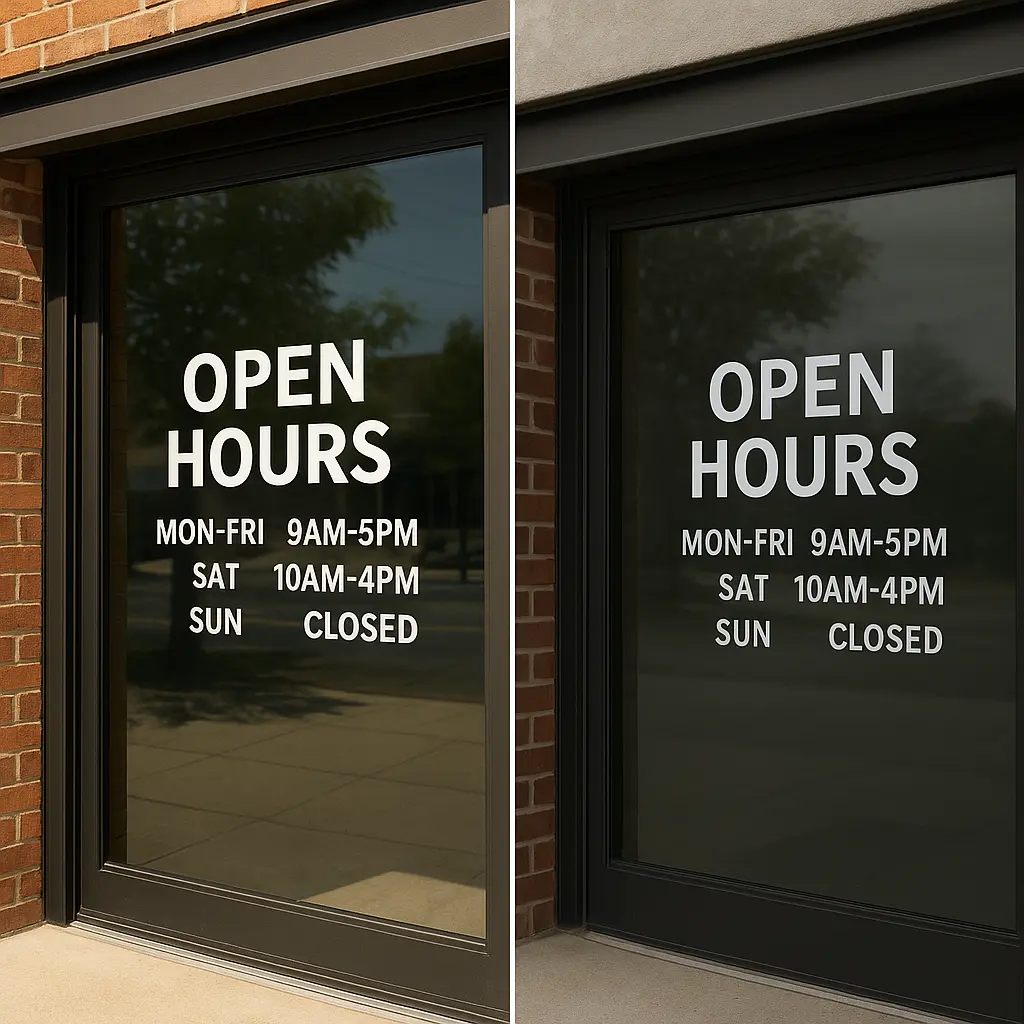
Outside placement means adhering your vinyl decal to the exterior surface of your window or glass door. The adhesive faces the glass, and the printed surface faces the street. This is the standard configuration most businesses recognize.
Inside placement requires the decal to be applied to the interior glass surface. The critical difference is that the vinyl must be printed in reverse (mirrored) so text and graphics read correctly when viewed from outside. The printed side faces the glass, while the adhesive backing faces your interior space.
In practice, outside placement dominates retail storefronts because it requires no special printing preparation. You simply apply standard ORACAL 651 vinyl directly to clean exterior glass. The business window signs face outward exactly as designed, with no technical complications.
The Optical Physics of Glass Placement
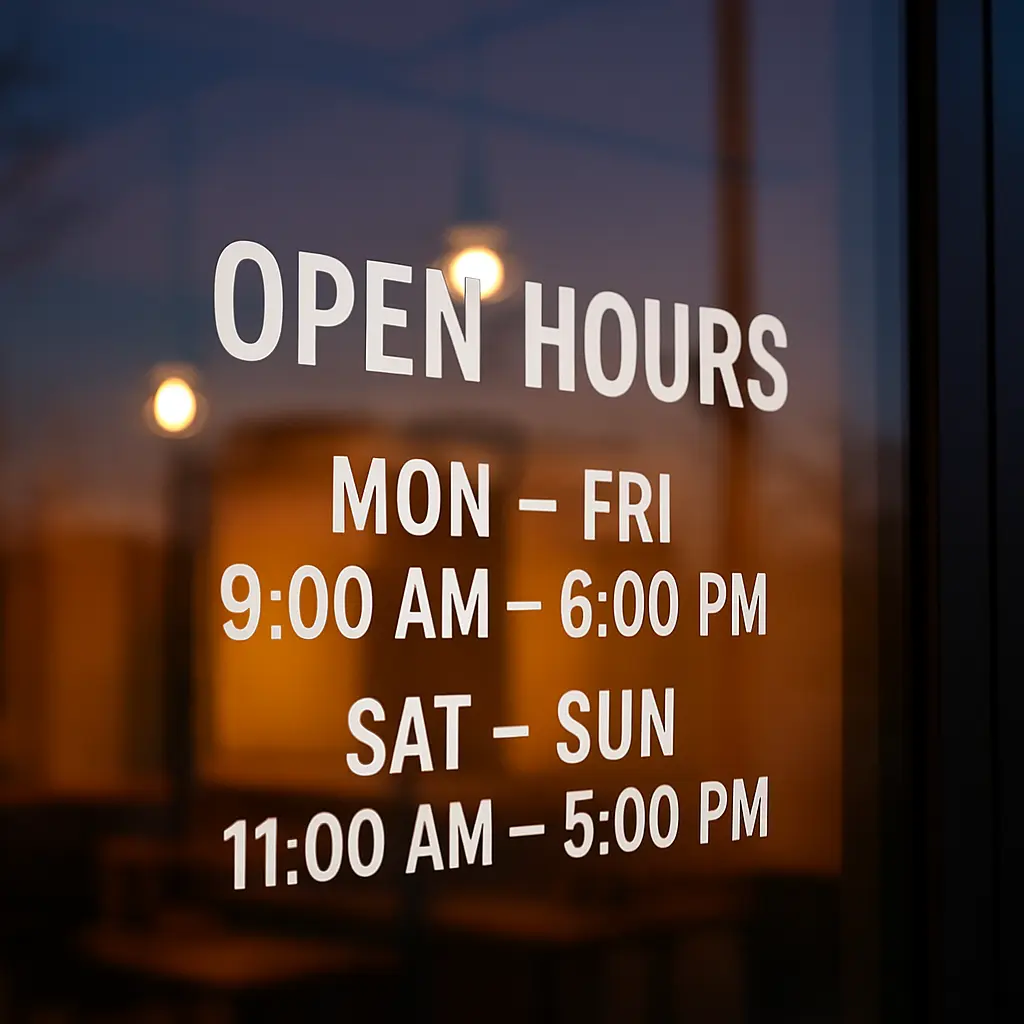
Glass acts as a partial mirror depending on lighting conditions. When interior spaces are darker than exterior environments, windows reflect exterior light, creating a mirror effect that obscures inside-placed decals. This phenomenon peaks during daytime hours when most customers approach your business.
Outside-placed decals sit on the reflective surface itself. They interrupt the mirror effect by providing a matte or glossy surface that contrasts with the surrounding glass. This physical positioning makes them visible even under harsh glare conditions that would render interior decals invisible.
Pro tip: Test your window’s glare zones by photographing your storefront from across the street at 10am, 2pm, and 5pm. If you see significant reflection obscuring interior details, outside placement is mandatory for open hours visibility.
Visibility Factors That Determine Placement
Window angle relative to the street determines 60% of your placement decision. North-facing windows receive indirect light throughout the day, creating minimal glare that allows inside placement to work. South-facing windows in the northern hemisphere receive direct sunlight that generates intense reflection, making outside placement essential.
Distance from curb or parking lot affects readability thresholds. If customers view your open hours decal from more than 30 feet away, outside placement provides the contrast and definition needed for quick comprehension. Closer distances under 15 feet allow inside placement to function adequately, assuming controlled lighting.
Surrounding lighting conditions create dramatic visibility shifts. A storefront recessed under an awning or covered walkway experiences reduced glare, making inside placement viable. Exposed storefronts on busy streets with no shade structures require outside placement for consistent readability throughout business hours.
Interior Lighting and Its Impact
Bright interior lighting during evening hours actually improves inside decal visibility by creating a lightbox effect. The illuminated interior turns your window into a glowing display that makes vinyl decals pop against the dark exterior. This is why restaurants and retail stores with strong interior lighting often succeed with inside placement.
However, this advantage disappears during daytime hours when exterior light overwhelms interior illumination. The data consistently shows that businesses relying solely on inside-placed open hours decals lose an average of 12-18% of potential foot traffic during peak daylight shopping hours compared to those using outside placement.
Traffic Pattern Considerations
High-speed traffic corridors demand maximum contrast and size. If your business sits on a road where traffic moves faster than 35 mph, outside placement is non-negotiable. The enhanced visibility and reduced glare interference provide the split-second recognition drivers need to make stopping decisions.
Pedestrian-focused locations allow more flexibility. Shoppers moving at walking speed can adjust their viewing angle to minimize glare, making inside placement functional in downtown retail districts, shopping centers, and pedestrian malls where customers approach from multiple angles.
The Small Business Administration reports that clear, visible business hours posted on storefronts increase customer confidence and reduce friction in the decision-making process, directly impacting foot traffic conversion rates.
Installation Techniques for Each Placement
Outside vinyl decal installation requires aggressive surface preparation because exterior glass collects environmental contaminants. Clean the application area with isopropyl alcohol (70% minimum concentration) to remove road film, pollen, and oxidation. Standard glass cleaner leaves residue that compromises adhesion within 6-12 months.
Temperature control matters more for outside placement. ORACAL 651 vinyl requires glass surface temperatures between 50°F and 90°F for proper adhesion. Install during moderate weather or use a heat gun to warm cold glass surfaces. Adhesive activation occurs through molecular bonding that demands specific temperature ranges to function correctly.
Wet Application Method for Professional Results
Mix three drops of dish soap in a 16-ounce spray bottle filled with water. Spray the glass surface liberally after cleaning. This wet application technique allows you to reposition the decal during installation, eliminating the stress of perfect first-attempt placement.
Apply the decal to the wet surface, then use a squeegee to push water and air bubbles from the center outward. Work systematically from top to bottom, maintaining consistent pressure. The soap solution gives you approximately 45-90 seconds of working time before the adhesive begins to grip.
Allow 24 hours for full cure before exposing outside-placed decals to rain or washing. The adhesive needs time to chemically bond with the glass surface. Premature water exposure can lift edges and create failure points that reduce your decal’s lifespan by 50% or more.
Inside Placement Special Requirements
Inside placement requires reverse-printed vinyl, which means you’re working with a mirrored image during installation. This creates spatial disorientation that increases installation errors. Place small alignment marks on the glass using painter’s tape before starting to maintain proper positioning throughout the process.
Interior glass surfaces are typically cleaner than exterior surfaces, but they collect different contaminants. Fingerprints, cooking oils (in restaurants), and cleaning product residue create adhesion barriers. Use the same isopropyl alcohol cleaning protocol as outside placement to ensure proper bonding.
The printed layer of inside-placed decals faces the glass, while the clear vinyl backing faces your interior. This configuration protects the ink from scratching but makes the decal more susceptible to interior damage from cleaning staff, furniture, or equipment. Position your window decal placement at heights above 48 inches to minimize accidental contact.
Pro tip: Mark your decal’s final position on the exterior glass using a grease pencil before going inside to install. This gives you a reference point visible from the interior that ensures your open hours sign appears exactly where customers will see it most effectively.

Durability and Maintenance Considerations
Outside-placed ORACAL 651 vinyl lasts 3-5 years in moderate climates with proper installation. Harsh desert environments with intense UV exposure reduce this to 2-3 years. Coastal areas with salt air create different degradation patterns that affect adhesive edges first, typically showing failure after 3-4 years.
Inside-placed vinyl regularly exceeds 7-10 year lifespans because it’s protected from the primary enemies of vinyl longevity. UV radiation, temperature cycling, precipitation, and wind-driven debris all attack exterior decals while interior installations remain untouched by these forces.
A common mistake is assuming UV-resistant vinyl means UV-proof. Even premium ORACAL 651 experiences color fade under direct sunlight. Red and yellow pigments degrade fastest, showing visible fading within 18-24 months of southern exposure. Dark blues and blacks maintain color integrity longest, often lasting the full 5-year exterior lifespan without noticeable change.
Cleaning and Maintenance Protocols
Outside decals require gentle cleaning with non-abrasive solutions. Use automotive wash soap diluted in water, never harsh chemicals or pressure washers. Pressure washing creates edge lift by forcing water under the vinyl perimeter, initiating a peeling process that destroys the decal within weeks.
Inside decals face a different threat from overzealous cleaning staff. Ammonia-based glass cleaners can yellow or cloud the vinyl over time. Instruct maintenance personnel to spray cleaner on the cloth, not directly on the decal, and wipe gently rather than scrubbing aggressively.
Weather Impact Analysis
| Environmental Factor | Outside Placement Impact | Inside Placement Impact |
|---|---|---|
| UV Radiation | Severe: Causes color fade, adhesive breakdown, and material brittleness within 3-5 years depending on exposure intensity | Minimal: Glass blocks 99% of UV radiation, extending color integrity to 10+ years with no protective measures needed |
| Temperature Cycling | Moderate: Daily expansion and contraction stress adhesive bonds, creating micro-separations that accumulate over time | None: Interior climate control maintains stable temperatures that eliminate thermal stress and adhesive fatigue |
| Moisture and Rain | High: Water infiltration at edges causes lifting, especially in vinyl lettering with complex cut patterns and multiple edges | None: Complete protection from moisture means adhesive maintains factory-fresh bonding strength indefinitely |
Vandalism resistance heavily favors inside placement. Outside decals are accessible targets for scratching, peeling, or sticker bombing by competitors or vandals. Inside placement puts your business window signs behind a glass barrier that requires breaking and entering to damage, providing inherent security.
Legal and Regulatory Compliance
Municipal codes frequently mandate that business hours must be visible from the public right-of-way without requiring customers to approach the door. This legal requirement often forces outside placement, especially in historic districts or downtown business improvement zones with strict signage ordinances.
The Americans with Disabilities Act includes provisions about information accessibility. While not specifically addressing open hours decals, the spirit of the law encourages placement that maximizes visibility for all potential customers, including those with vision impairments who benefit from high-contrast exterior signage.
Homeowner associations and shopping center management agreements commonly restrict exterior signage while allowing interior window displays. If you lease retail space in a managed property, review your agreement before investing in outside-placed vinyl decals. Violation can trigger fines or forced removal.
Insurance and Liability Factors
Some commercial insurance policies include clauses about posted business hours, particularly for establishments serving alcohol or operating during late-night hours. Verify that your chosen placement method creates a permanent, weather-resistant display that satisfies your insurer’s requirements for hour disclosure.
Incorrect or illegible hours that cause customer frustration occasionally appear in negative online reviews. While not a legal issue, the reputational damage from poorly placed decals that customers cannot read affects your business more directly than most regulatory concerns.
Troubleshooting Common Placement Mistakes
The most expensive error is applying standard-printed vinyl to interior glass expecting it to read correctly from outside. This creates mirror-image text that looks professional from inside your store but appears completely backwards to customers. The fix requires complete removal and replacement with reverse-printed vinyl, doubling your material and labor costs.
Improper surface preparation causes 70% of premature vinyl decal installation failures. A thin film of dust, wax, or cleaner residue invisible to the naked eye prevents molecular adhesive bonding. The decal appears properly installed initially but develops edge lifting within 30-90 days as vibrations and temperature changes exploit the weak bond.
Positioning open hours decals behind security bars, within door frame shadows, or adjacent to reflective building features kills their effectiveness. In practice, a perfectly installed decal in a poor location performs worse than a mediocre installation in an optimal position. Survey your storefront from 50 feet away at multiple times of day before committing to a location.
Bubble and Wrinkle Elimination
Small bubbles under 1/8 inch typically disappear within 48 hours as trapped air migrates through the vinyl. Larger bubbles indicate inadequate squeegee pressure during installation. Use a pin to puncture the bubble edge, then squeegee the air out through the hole. The puncture will be invisible from normal viewing distances.
Wrinkles result from stretching vinyl during application or installing on curved glass without heat. Vinyl has minimal stretch capacity, unlike vinyl wrap films designed for vehicle curves. On curved surfaces, use a heat gun to make the material pliable, then work in small sections to conform the decal without creating stress wrinkles.
Dealing with Failed Installations
Removing failed vinyl requires patience to avoid glass damage. Heat the decal with a hair dryer or heat gun to soften the adhesive, then peel slowly at a 45-degree angle. Pull parallel to the glass surface, never straight out, which can pull glass coatings or even chip tempered glass edges.
Adhesive residue left after removal comes off with citrus-based adhesive remover or isopropyl alcohol. Avoid razor blades on modern Low-E glass or tinted windows, which have coatings that scratch easily. Use plastic scrapers designed for glass stovetop cleaning instead.
Pro tip: Keep your backing paper and transfer tape for 30 days after installation. If your decal fails due to adhesion issues, these materials provide proof of proper vinyl quality for warranty claims with your supplier.
Frequently Asked Questions
Can I install open hours decals on both sides of the glass for maximum visibility?
Yes, and this dual placement strategy solves most visibility challenges. Install a standard-printed decal on the exterior for daytime visibility and weather resistance, then add a reverse-printed version on the interior as backup for evening hours when interior lighting creates the lightbox effect. This approach costs more upfront but eliminates the need to choose between durability and optimal visibility. Make sure both decals align precisely to avoid a shadowing effect that makes text appear blurry from certain angles.
How do I know if my windows have Low-E coating that affects vinyl adhesion?
Low-E coatings appear on interior surfaces of insulated glass units and can interfere with vinyl bonding. Hold a lighter or flashlight near the glass and observe reflections. Low-E glass shows a different colored flame reflection (often purple or blue) compared to uncoated glass. Contact your building manager or window installer to verify coating presence and location. Most ORACAL 651 vinyl bonds successfully to Low-E coatings, but the cure time extends from 24 hours to 72 hours for full adhesion strength.
What size should open hours decals be for storefront visibility from parking lots?
Use the 1 inch per 10 feet rule as your baseline. For parking lot visibility at 50 feet, your letter height should be at least 5 inches. However, this assumes ideal lighting and contrast conditions. Increase to 7-8 inch letters if your storefront faces direct sun or if the decal color contrasts poorly with the background. The data consistently shows that businesses underestimate required size by 30-40%, resulting in decals that look perfect up close but disappear from decision-making distances where customers choose whether to visit.
Can extreme cold or heat during installation permanently damage vinyl decals?
Temperature during installation directly affects long-term performance. Installing below 50°F prevents proper adhesive activation, creating a bond that may last weeks but fails within months as temperature cycling stresses the incomplete molecular connection. Installing above 95°F can cause adhesive to become too aggressive, making repositioning impossible and trapping bubbles. If you must install in extreme temperatures, condition both the vinyl and glass surface to 60-75°F using climate-controlled spaces or heat guns before beginning the vinyl decal installation process.
Do textured or frosted windows require different installation approaches for open hours decals?
Textured glass surfaces reduce vinyl adhesion by up to 60% because the adhesive only contacts the raised portions of the texture pattern. For inside placement on frosted glass, this often works adequately since the protected environment compensates for reduced initial bond strength. Outside placement on textured glass fails quickly as weather exploits the gap-filled texture. Use specialty adhesive vinyl designed for textured surfaces, or apply your open hours decal to a smooth glass section if available. Alternatively, mount the decal on rigid substrate material and attach it to a smooth adjacent surface rather than fighting the textured glass.
How long should I wait after window installation before applying vinyl decals?
New window installations require 30 days of curing time before vinyl application. Window glazing compounds, silicone sealants, and even glass coatings continue off-gassing volatile compounds that interfere with adhesive bonding during this period. Installing vinyl on fresh windows creates a weak bond that fails within 90-180 days as the outgassing completes and the adhesive loses its grip. If you must install immediately due to business opening deadlines, acknowledge that you’re accepting a higher risk of failure and may need to replace the decals within the first year.
What placement strategy has worked best for your business window signs, and what unexpected challenges did you encounter during installation?
We would love your feedback and any insights you would share with others. What perspective would you add?