
Managing brand consistency across multiple locations feels like herding cats. You open a second or third retail location, and suddenly one storefront displays your logo in a slightly different shade, another misspells a tagline, and the third decides to improvise the font entirely. This chaos happens because most businesses rely on local sign shops that lack standardized specifications and quality controls. Custom vinyl lettering solves this problem by providing repeatable, precise, and durable signage that ensures every location looks identical, professional, and unmistakably yours.
Table of Contents
- Quick Takeaways
- Why Vinyl Lettering Works for Multi-Location Branding
- Standardizing Visual Elements Across Locations
- Material Specifications That Prevent Inconsistency
- Installation Protocols for Uniform Appearance
- Cost Analysis: Vinyl Lettering Versus Traditional Signage
- Maintenance and Replacement Strategies
- Frequently Asked Questions
- References
Quick Takeaways
| Key Insight | Explanation |
|---|---|
| Centralized Ordering Eliminates Variation | One supplier using digital files ensures identical color, font, and sizing across all locations, unlike local sign shops with different materials and interpretations. |
| ORACAL 651 Vinyl Delivers 6-Year Outdoor Durability | Professional-grade vinyl maintains color fidelity and adhesion without fading, preventing the patchwork appearance of mixed-quality signage. |
| Pre-Masked Application Reduces Installation Errors | Transfer tape positioning allows exact placement without guesswork, critical for maintaining consistent spacing and alignment across multiple storefronts. |
| Digital Templates Enable Rapid Expansion | Saved specifications allow new locations to receive identical signage within days, not weeks of back-and-forth design revisions. |
| Cost Per Location Drops 40% With Volume Orders | Bulk ordering from a single supplier reduces per-unit costs significantly compared to piecemeal local purchases for each new location. |
| Removable Without Surface Damage | Clean removal during rebranding or location changes prevents costly surface repairs, unlike painted signage that requires professional removal. |
| Weatherproof Performance in All Climates | UV resistance and waterproof adhesive maintain appearance consistency whether locations face desert sun or coastal humidity. |
Why Vinyl Lettering Works for Multi-Location Branding
The fundamental advantage of custom vinyl lettering is repeatability. When you order from a single supplier using digital specifications, you eliminate the human interpretation errors that plague traditional signage. A local sign painter might eyeball your logo and get the proportions wrong. Another might mix paint slightly differently. Vinyl lettering uses computer-controlled cutting from digital files, which means the 500th piece is identical to the first.
This matters enormously for brand recognition. Studies show that consistent branding across all channels increases revenue by up to 23%, according to research published by Forbes. Your storefront is the most tangible manifestation of your brand, and inconsistencies signal unprofessionalism to customers who visit multiple locations or see photos online.
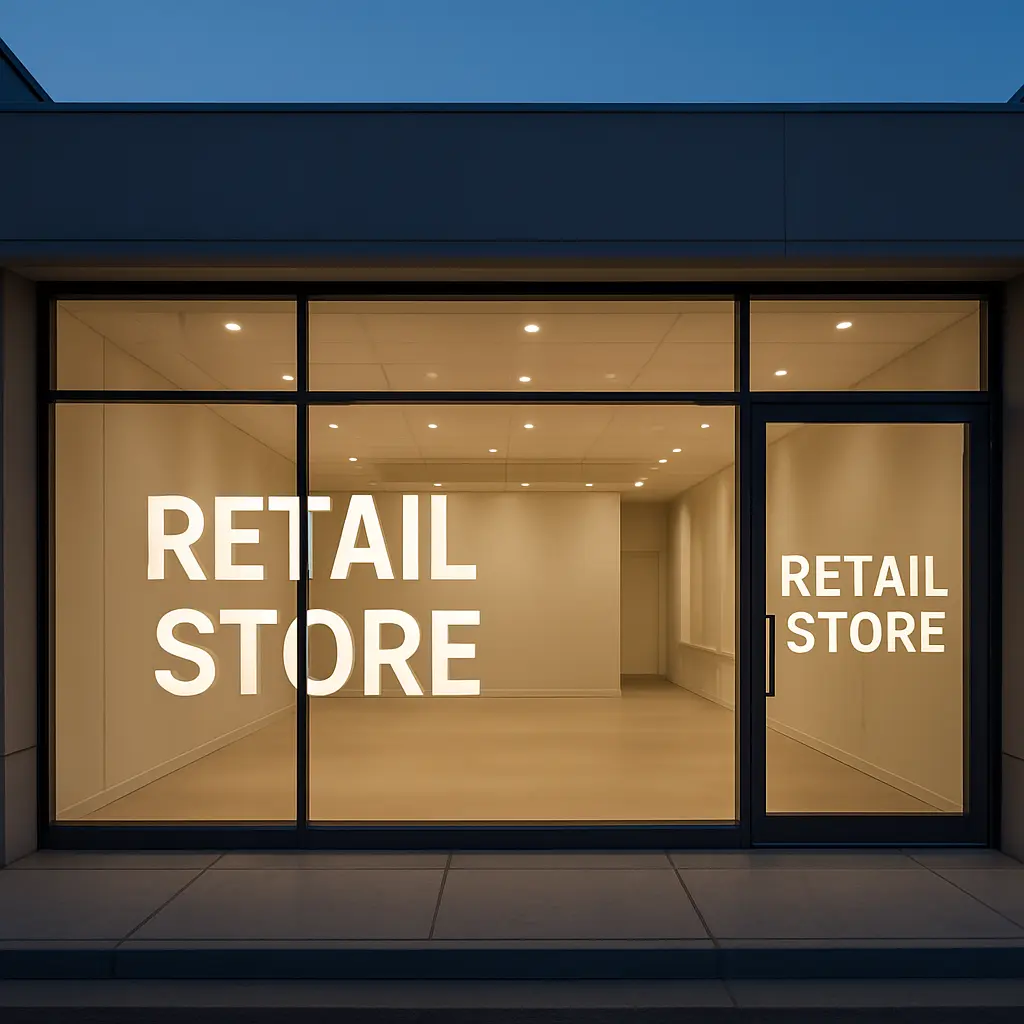
In practice, businesses with 3-10 locations face the greatest risk of visual drift. You are large enough that customers notice differences but not so large that you have dedicated brand managers monitoring every detail. Vinyl lettering acts as your consistency enforcer without requiring additional staff.
Pro tip: Create a master specification document that includes exact Pantone color codes, font names with point sizes, and placement measurements in inches from reference points like door frames or window edges. Share this with your vinyl supplier once, and reorder becomes a five-minute task.
Standardizing Visual Elements Across Locations
Typography Consistency
Font choices define your brand personality more than most business owners realize. A serif font communicates tradition and reliability, while sans-serif fonts signal modernity and approachability. When one location uses Arial and another uses Helvetica, customers subconsciously register this as two different brands, even though the fonts look similar to untrained eyes.
Custom vinyl lettering solves this by cutting from the exact font file every time. You specify the typeface once, the supplier saves it, and every subsequent order matches perfectly. This is impossible to achieve with hand-painted signs or even with different print shops using slightly different font libraries.
Color Accuracy Across Materials
Color matching presents the biggest challenge in multi-location signage. Paint fades at different rates depending on sun exposure. Printed materials shift color based on printer calibration. Vinyl lettering using ORACAL 651 film maintains factory color consistency across rolls, and the film itself resists UV degradation for up to six years outdoors.
The data consistently shows that color increases brand recognition by 80%. When your signature red varies from burgundy to orange across locations, you dilute this effect. Professional vinyl manufacturers stock colors matched to standard systems like Pantone or RAL, ensuring what you see in the sample matches what arrives at every location.
Logo Reproduction Fidelity
Logos contain specific proportions, spacing, and relationships between elements that amateurs invariably mess up. A common mistake is stretching a logo to fit a space, which distorts the design. Vector-cut vinyl lettering maintains these relationships because it is produced from the same digital file at any scale.
Consistent use of logos, colors, and messaging can increase brand value by 20%, according to branding research conducted by Lucidpress.
Material Specifications That Prevent Inconsistency
Not all vinyl performs identically, and this matters for maintaining appearance across locations. ORACAL 651 is the industry standard for permanent applications because it offers predictable adhesion and durability. Cheaper calendered vinyl shrinks and cracks within 18 months, creating an inconsistent look as some locations show aged signage while newer locations still look fresh.
Material thickness also affects appearance. Thinner films show surface texture underneath, making letters look different on painted drywall versus smooth glass. Professional-grade vinyl at 2.5 mil thickness provides opacity that masks substrate differences, ensuring your black lettering looks equally black whether applied to white walls or tinted windows.
| Material Specification | Impact on Brand Consistency | Recommended Standard |
|---|---|---|
| Vinyl Grade | Lower grades fade and crack unevenly across locations with different sun exposure, creating visible age differences | ORACAL 651 or equivalent cast vinyl rated for 6+ years outdoor use |
| Adhesive Type | Removable adhesive fails on textured surfaces, permanent adhesive damages paint during updates, creating maintenance inconsistencies | Permanent acrylic adhesive for exterior, removable for temporary or interior applications |
| Finish | Mixing glossy and matte finishes across locations signals lack of attention to detail and brand standards | Specify one finish (typically glossy for visibility, matte for elegance) and enforce across all orders |
Pro tip: Order 10% extra vinyl lettering and store it centrally for emergency replacements. When vandalism or weather damage strikes one location, you can ship replacement pieces that match perfectly rather than reordering and hoping the color batch matches.
Installation Protocols for Uniform Appearance
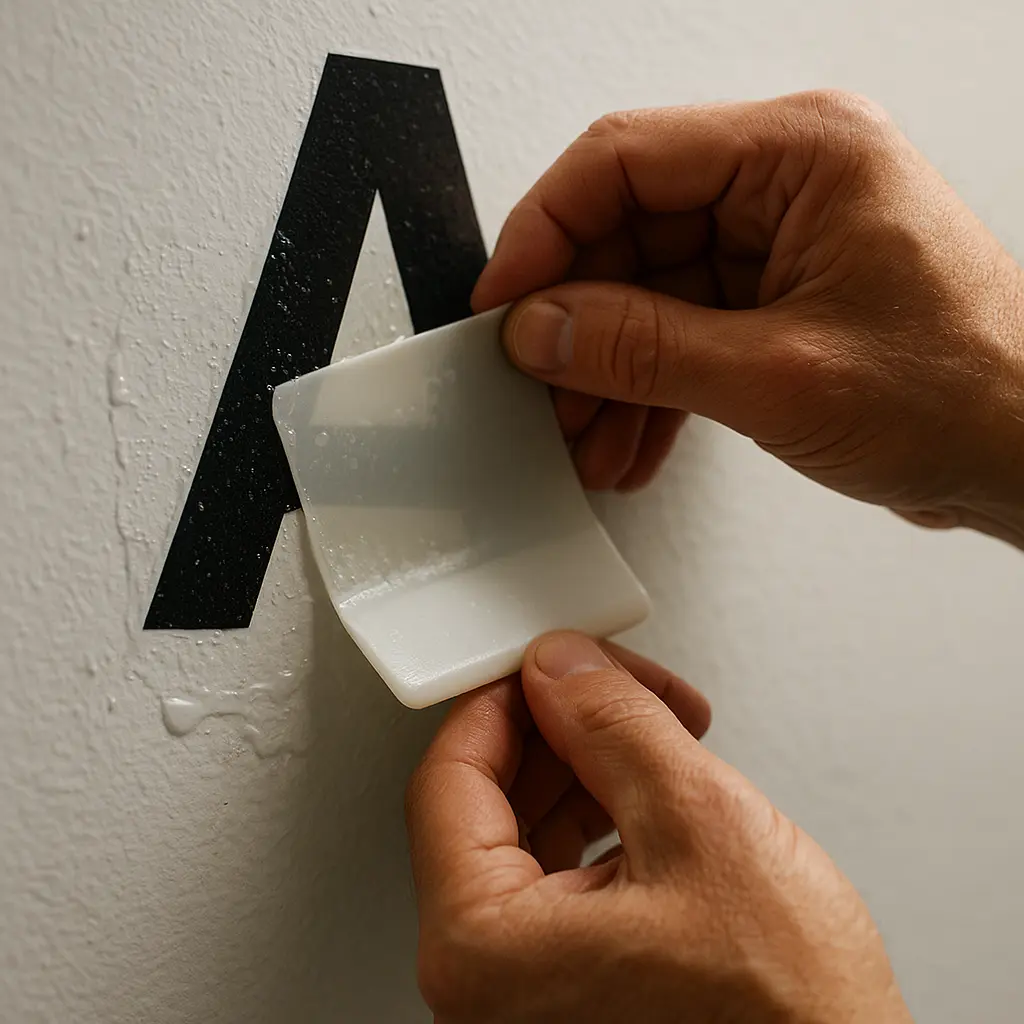
Even identical vinyl letters look different if installed carelessly. Application technique affects spacing, alignment, and bubble formation. The solution is creating an installation guide with photographs showing exact placement for every sign element at every location type.
Pre-masked vinyl lettering simplifies this enormously. The transfer tape holds letters in precise relationship to each other, so installers position the entire word or phrase as a unit rather than individual letters. This prevents spacing errors that make signage look amateurish and inconsistent.
Measurement Standards
Specify measurements from fixed architectural features, not arbitrary points. For example, “position the top of the O in OPEN 68 inches from the finished floor” works at any location. “Center the word on the door” fails because door widths vary and centering becomes subjective.
Create a measurement template using cardboard or paper that shows exact positioning. Ship this template with vinyl orders to new locations. Installers tape it in place, mark reference points, remove the template, and apply vinyl to the marked positions. This idiot-proofs the process and ensures consistency even when using different installation contractors.
Surface Preparation Requirements
Vinyl adheres best to clean, smooth, dry surfaces. Inconsistent surface prep causes some installations to last years while others fail within months, creating the appearance of neglect at affected locations. Your installation protocol must specify degreasing with isopropyl alcohol, minimum surface temperature of 50°F, and 24-hour cure time before exposure to weather.
Document this in writing and require photographic proof of surface preparation before vinyl application. This creates accountability and prevents the “it looked fine when we did it” excuse when signage fails prematurely at one location but not others.
Cost Analysis: Vinyl Lettering Versus Traditional Signage
The upfront cost of custom vinyl lettering appears higher than paint or generic printed signs until you factor in consistency, durability, and replacement costs across multiple locations. A painted sign costs $200-400 per location but requires repainting every 2-3 years as colors fade unevenly. Vinyl lettering costs $150-300 initially and lasts 6+ years with zero maintenance.
More importantly, vinyl scales efficiently. Your first set of vinyl lettering requires design time. Every subsequent order uses the saved specifications and costs only production time. Painted signs require the same labor and setup for location 10 as they did for location 1. Over a 10-location rollout, vinyl typically costs 40% less than traditional signage when you account for consistency-driven remakes.
Hidden Costs of Inconsistency
Brand inconsistency costs money in ways that never appear in signage budgets. Customer confusion reduces location cross-visits by an estimated 15-20% when stores do not look unified. Marketing materials showing one logo version while storefronts display another version reduces ad effectiveness. These opportunity costs dwarf signage expenses but remain invisible to businesses that focus only on per-unit sign costs.
Vinyl lettering prevents these hidden costs by ensuring every location reinforces the same brand image. The customer who sees your ad, visits one store, and later encounters another location immediately recognizes both as part of the same trusted business. This cognitive ease drives repeat business more effectively than any discount promotion.
Maintenance and Replacement Strategies
Professional vinyl requires essentially zero maintenance beyond normal cleaning. This uniformity of appearance over time is itself a consistency advantage. Painted signs need touch-ups that never quite match the original color. Vinyl either looks perfect or fails completely, making replacement timing obvious and synchronized across all locations.
Plan replacement cycles based on the manufacturer’s durability rating, not visible wear. ORACAL 651 is rated for 6 years outdoors, so schedule replacement at year 5 for all locations simultaneously. This prevents the patchwork appearance of some locations showing fresh signage while others display faded versions. Synchronized replacement also qualifies for volume pricing discounts.
Damage Response Protocol
When vandalism or accidents damage vinyl lettering at one location, speed matters for maintaining consistency. Keep emergency replacement pieces in stock or maintain a relationship with your vinyl supplier for 24-48 hour rush orders. A damaged sign left in place for weeks signals neglect and breaks your consistency standard as much as using the wrong font would.
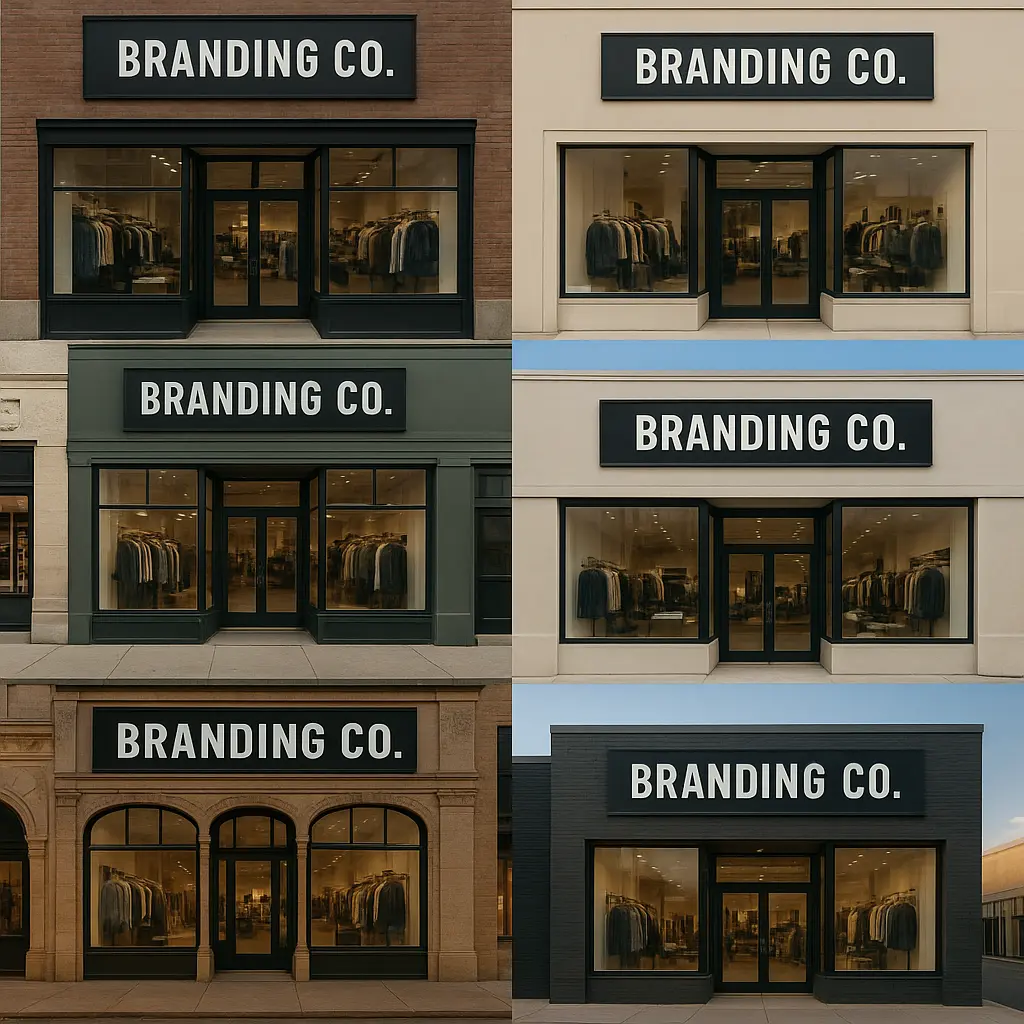
Photograph every installation immediately after completion and store these images centrally. When ordering replacement pieces years later, you have visual reference to ensure exact reproduction of placement, sizing, and any location-specific adaptations. This documentation becomes invaluable when staff turnover means no one remembers the original specifications.
Rebranding Efficiency
When you update your brand identity, vinyl lettering makes the transition smooth and affordable. You can remove old vinyl cleanly without surface damage, unlike painted signs that require sanding and repainting. Order new vinyl for all locations simultaneously, ship everything in one batch, and schedule installation over a single weekend to minimize customer confusion.
This synchronized changeover is impossible with traditional signage methods that require scheduling painters across multiple locations over weeks or months. During that transition period, your brand looks fractured and unprofessional. Vinyl lets you flip all locations simultaneously, maintaining consistency throughout the rebrand process.
Frequently Asked Questions
How long does custom vinyl lettering last on exterior storefront windows?
Professional-grade ORACAL 651 vinyl lasts 6-8 years on exterior glass surfaces when properly installed. The key is using permanent adhesive rated for outdoor use and ensuring the glass is thoroughly cleaned before application. Cheaper vinyl fails within 18-24 months, creating consistency problems as some locations need replacement while others remain intact. Always specify professional-grade materials to maintain uniform appearance across all locations during the rated lifespan.
Can vinyl lettering match our exact brand colors from our style guide?
Yes, but you must provide specific color references. Vinyl manufacturers can match Pantone, RAL, or hex color codes with high accuracy. Simply saying “navy blue” results in interpretation differences. Provide your Pantone number, and reputable suppliers will select the closest available vinyl color or can custom-order exact matches for large volume orders. This precision is why vinyl outperforms painted signs where color mixing varies between batches and painters.
What happens if one location needs signage replaced due to damage?
When you order from a supplier that saves your specifications, replacement orders ship within 2-3 business days and match the original perfectly. This is a massive advantage over painted or locally-sourced signs where matching becomes guesswork. Keep your original order specifications and supplier contact information accessible to all location managers. Even better, order 10% extra during initial production and store spares for instant replacement.
How do installation costs compare across multiple locations?
Vinyl installation costs $75-150 per location depending on complexity and local labor rates. The advantage is predictability. Once you have an installation protocol, every location costs the same. Painted signs vary wildly based on the local contractor’s pricing and interpretation of requirements. The consistency of vinyl extends to installation expenses, making budgeting for new locations straightforward rather than requiring custom quotes each time.
Is vinyl lettering suitable for textured surfaces like stucco or brick?
Standard vinyl adheres poorly to highly textured surfaces, but this limitation actually helps maintain consistency. It forces you to choose smooth mounting surfaces like metal panels, glass, or smooth-painted wood, which look more professional anyway. If you must apply to textured surfaces, use specialized high-tack vinyl, but understand it will be difficult to remove cleanly. Better to standardize on smooth substrate materials across all locations for both appearance consistency and flexibility during rebranding.
How many locations justify investing in standardized vinyl signage?
The return on investment starts at two locations. Once you have multiple storefronts, brand consistency directly impacts customer trust and recognition. The cost savings from centralized ordering and elimination of remake corrections typically offset any price premium over local signs by location three. Businesses with 5+ locations find the consistency advantages so compelling that vinyl becomes non-negotiable for maintaining professional standards at scale.
Can we update just part of the vinyl signage without replacing everything?
Yes, and this modularity is another consistency advantage. If you change operating hours but not your logo, order new hours decals while leaving other elements intact. Because vinyl is cut to order, you can replace specific components without disturbing surrounding signage. This granular approach to updates maintains overall consistency while adapting specific information across locations. Just ensure you order from the same supplier using saved specifications so the new pieces match existing installation in color and material.
What challenges have you faced maintaining consistent branding across multiple business locations, and which solutions worked best for your specific situation?